Your Childhood Bedroom Was Supposed to Be Boring—That Was the Point
The Spartan Sanctuary
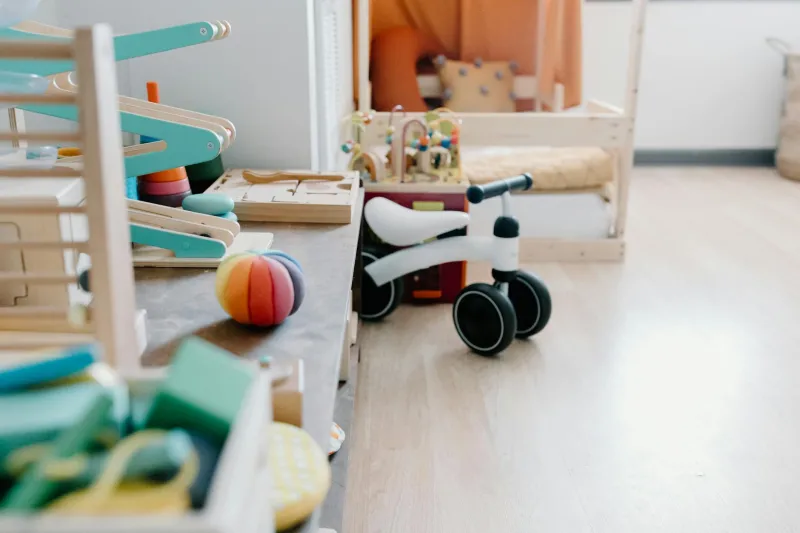
Today's American child's bedroom looks like a miniature entertainment complex. Gaming consoles, tablets, smart TVs, toy organizers that rival warehouse systems, and enough electronic devices to power a small office. Walk into any modern kid's room and you'll find a self-contained universe designed to prevent even a moment of unstimulated time.
But travel back to 1970, and you'd find something radically different: rooms that were almost aggressively boring.
A typical child's bedroom contained a bed, a dresser, maybe a small desk, and if the family was well-off, a bookshelf with a modest collection of stories. The walls might have a few posters or drawings, but the room's primary function wasn't entertainment—it was sleep, with a side of quiet time that kids were expected to fill themselves.
This wasn't neglect or lack of resources. It was intentional parenting philosophy, built on the revolutionary idea that children needed to be bored.
Boredom as Brain Food
The sparse bedroom was part of a broader childhood ecosystem that treated unstimulated time as essential nutrition for developing minds. Parents understood something we've largely forgotten: creativity emerges from emptiness, not abundance.
Without screens or endless toy options, children were forced to become the architects of their own entertainment. They'd lie on their beds and create elaborate stories starring ceiling cracks. They'd turn dresser drawers into dollhouses or cardboard boxes into spaceships.
This kind of unstructured mental wandering—what psychologists now call "default mode network activation"—is crucial for developing imagination, problem-solving skills, and emotional regulation. But it only happens when the brain isn't constantly fed external stimulation.
Research from the 1970s and 80s consistently showed that children who spent significant time in unstimulated environments scored higher on creativity tests and showed better ability to entertain themselves independently. Their brains learned to generate rather than just consume.
The Great Escape Strategy
The boring bedroom served another critical function: it made the outside world irresistible. When your room contained nothing more exciting than yesterday's homework, the backyard became an adventure zone. The neighborhood transformed into a vast playground worth exploring.
Parents didn't need to push kids outside—children naturally migrated toward more stimulating environments. They'd burst through screen doors with the urgency of prisoners making a break for freedom, desperate to find something, anything, more interesting than staring at their bedroom walls.
This natural migration pattern created what child development experts call "environmental gradients"—spaces that gradually increased in stimulation and social complexity as children moved from private bedroom to family areas to neighborhood spaces.
The Entertainment Revolution
The shift began in the 1980s with the introduction of personal televisions and early gaming systems. Suddenly, bedrooms could compete with the outside world for children's attention. What started as a special treat—a small TV for weekend cartoons—gradually evolved into comprehensive entertainment systems.
By the 1990s, the "media-rich bedroom" had become a status symbol among middle-class families. Parents began viewing their children's rooms as investment spaces, loading them with educational toys, computer systems, and entertainment options that promised to give kids advantages over their peers.
The smartphone revolution of the 2000s completed the transformation. Children's bedrooms became portals to infinite entertainment, social connection, and stimulation. The space that once encouraged internal creativity became a gateway to external consumption.
The Always-On Generation
Today's children experience something unprecedented in human history: the complete absence of genuine boredom. When every moment can be filled with videos, games, messages, or interactive content, the brain never learns to generate its own entertainment.
Modern parents often interpret their child's complaint of being "bored" as a problem to be solved rather than a developmental opportunity to be embraced. The instant response is to suggest an activity, offer a device, or provide external stimulation.
But neuroscience research shows that this constant stimulation may be rewiring children's brains in concerning ways. Kids who rarely experience unstimulated time show decreased ability to focus, reduced creativity in problem-solving tasks, and increased anxiety when separated from entertainment sources.
The Social Cost of Private Entertainment
The entertainment-rich bedroom has also fundamentally altered childhood social development. When kids can access friends, games, and endless content from their private spaces, they spend dramatically less time in shared family areas and community spaces.
Previous generations developed social skills through necessity—when you were bored in your room, you sought out siblings, parents, or neighborhood friends. These interactions, often born from desperation rather than preference, taught crucial lessons about negotiation, compromise, and human connection.
Today's children can remain socially isolated while feeling constantly connected through digital interactions. They're losing opportunities to develop the face-to-face communication skills that come from needing other people for entertainment and emotional regulation.
The Creativity Crisis
Educational researchers have documented what they call the "creativity crisis" among American children. Scores on standard creativity assessments have declined significantly since 1990, with the steepest drops occurring among the youngest children.
This decline correlates directly with the rise of entertainment-rich bedrooms and the corresponding decrease in unstructured, unstimulated time. Children who once spent hours daydreaming, building imaginary worlds, or creating games from household objects now consume pre-made entertainment designed by adults.
The irony is profound: in trying to give children every advantage through stimulation and educational entertainment, we may have inadvertently hampered their ability to think independently and create original solutions.
The Impossible Return
Few parents today would seriously consider returning to 1970s-style sparse bedrooms. The social pressure to provide children with technological advantages is enormous, and the outside world that once drew kids from boring rooms is now perceived as more dangerous than ever.
But understanding what we've lost helps explain why so many modern children struggle with anxiety, attention issues, and creative problem-solving. The boring bedroom wasn't just about space—it was about creating conditions where young minds could develop the internal resources they'd need as adults.
In our rush to eliminate childhood boredom, we may have eliminated something far more valuable: the capacity to be alone with one's thoughts and still find the world interesting.