When Getting on a Plane Meant Putting on Your Best Suit
In 1965, stepping aboard a commercial airliner felt like entering an exclusive club. Passengers arrived in their finest attire—men in pressed suits and ties, women in dresses and heels, children in their Sunday best. Flight attendants, known then as stewardesses, greeted each passenger personally while serving multi-course meals on real china with actual silverware. The seats were wide enough for comfort, and the aisles spacious enough for dignity.
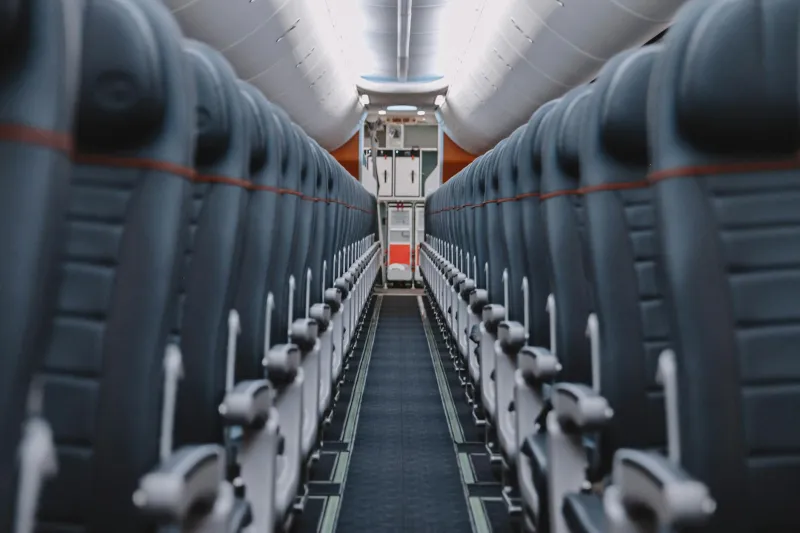
Today, air travel resembles a cross between a city bus and a medical procedure. Passengers shuffle through security in their socks, clutching plastic bags of toiletries, before cramming into seats that would challenge a contortionist. The $12 sandwich comes wrapped in plastic, and the flight attendant's primary job seems to be preventing passengers from killing each other over armrest territory.
How did we fall so far from grace at 30,000 feet?
The Golden Age That Actually Existed
The 1960s and early 1970s represented commercial aviation's glamour era, and it wasn't just marketing hype. Airlines competed fiercely on service quality because ticket prices were regulated by the government. Since they couldn't compete on cost, they competed on experience.
Pan Am's 747s featured piano bars and spiral staircases. TWA hired celebrity architects to design terminals that looked like space stations. Even coach passengers enjoyed 34 inches of legroom—about 4 inches more than today's domestic first class. Meals were prepared by real chefs, not reheated in industrial microwaves, and included options like lobster thermidor and beef wellington.
The experience began at the terminal, which resembled elegant hotels rather than today's shopping mall food courts surrounded by departure gates. Passengers arrived early not because of security requirements, but because airports were destinations unto themselves, complete with observation decks where families gathered to watch planes take off and land.
When Flying Was Actually Special
Air travel remained relatively rare and expensive, which contributed to its mystique. In 1970, the average American took fewer than two flights per year, compared to about 2.5 today. A coast-to-coast ticket cost roughly $1,400 in today's dollars—making it a genuine splurge that passengers prepared for like a special occasion.
This exclusivity created a different social dynamic aboard aircraft. Passengers dressed appropriately because flying was an event worthy of respect. Children were expected to behave because their parents recognized the privilege of air travel. The shared understanding that everyone aboard had made a significant financial commitment fostered a collective sense of decorum.
Flight attendants underwent extensive training that emphasized hospitality alongside safety. They were expected to remember passenger names, dietary preferences, and travel patterns. Many spoke multiple languages and could recommend restaurants in destination cities. The job attracted college graduates who saw it as a glamorous career, not a temporary gig.
The Deregulation Revolution
Everything changed in 1978 when Congress deregulated the airline industry. Suddenly, carriers could compete on price, and they did so aggressively. New airlines like People Express and Southwest offered no-frills service at dramatically lower prices, forcing established carriers to strip away amenities to remain competitive.
The transformation was swift and merciless. Free meals disappeared on domestic flights. Seat pitch—the distance between rows—shrank from 34 inches to as little as 28 inches. Blankets and pillows became premium amenities. Even peanuts, the last vestige of free airplane food, eventually vanished from most carriers.
Airlines discovered that passengers consistently chose cheaper flights over better service, even when the price difference was minimal. This created a race to the bottom that continues today, where airlines compete primarily on ticket price while charging separately for everything that once defined air travel.
The Security State Takes Flight
The September 11 attacks accelerated aviation's transformation from hospitality industry to security apparatus. The Transportation Security Administration introduced procedures that would have seemed dystopian to previous generations of travelers: removing shoes, surrendering liquids, submitting to body scans, and accepting that arriving two hours early for domestic flights was the new normal.
The focus shifted from passenger comfort to passenger control. Airline employees became enforcers of federal regulations rather than hospitality professionals. The customer service culture that once defined aviation gave way to a compliance culture where passengers were treated as potential threats rather than valued guests.
Meanwhile, airlines used security concerns to justify additional restrictions and fees. Baggage limits tightened, carry-on rules multiplied, and the simple act of changing seats became a revenue opportunity rather than a courtesy.
The Nickel-and-Dime Economy
Modern airlines have perfected the art of unbundling—breaking down what was once included in a ticket price into dozens of separate fees. Checked bags, seat selection, early boarding, extra legroom, food, beverages, and even pillows now carry individual charges. The result is that while base fares appear lower than in the regulated era, the total cost of flying often exceeds what passengers paid in the golden age.
This à la carte approach extends beyond fees to basic human dignity. Airlines now charge premium prices for seats with legroom that was once standard. They've created artificial scarcity around amenities that were once universal, training passengers to feel grateful for services that were once considered basic expectations.
The Democracy of Discomfort
Deregulation achieved its primary goal: making air travel accessible to more Americans. A middle-class family can now fly to Disney World for less than they'd spend on a week-long car trip in 1970. Business travel became routine rather than exceptional, connecting markets and enabling economic growth that would have been impossible under the old system.
But accessibility came at the cost of dignity. Modern air travel is democratic in the worst sense—equally miserable for nearly everyone. The egalitarian ideal of affordable transportation collided with the reality that some experiences simply can't be commoditized without losing their essential character.
What We Traded Away
The transformation of air travel reflects broader changes in American culture and economics. We've become a society that prioritizes access over experience, efficiency over elegance, and cost over comfort. The assumption that cheaper is always better has reshaped not just how we fly, but how we think about service, quality, and our own worth as consumers.
The old system was undeniably elitist, but it maintained standards that elevated everyone involved. Passengers rose to meet expectations of appropriate behavior and dress. Airlines competed to exceed rather than merely meet basic requirements. The entire ecosystem operated on the premise that air travel was special and should be treated accordingly.
The View from 30,000 Feet
Looking back, the golden age of aviation seems almost mythical—a time when corporations prioritized customer experience over shareholder returns, when passengers took pride in their appearance, and when the journey mattered as much as the destination.
We can't return to regulated pricing or the exclusivity that defined early commercial aviation. But we might ask whether the race to the bottom has gone too far, and whether there's value in treating air travel—and by extension, ourselves—with a bit more dignity than the current system allows.
After all, there's something to be said for a world where getting on an airplane required putting on your best suit. It suggested that the experience ahead was worthy of respect, and that the people sharing it deserved nothing less.