Five Things in a Cabinet, Fifty Years Later It Takes Two Shelves
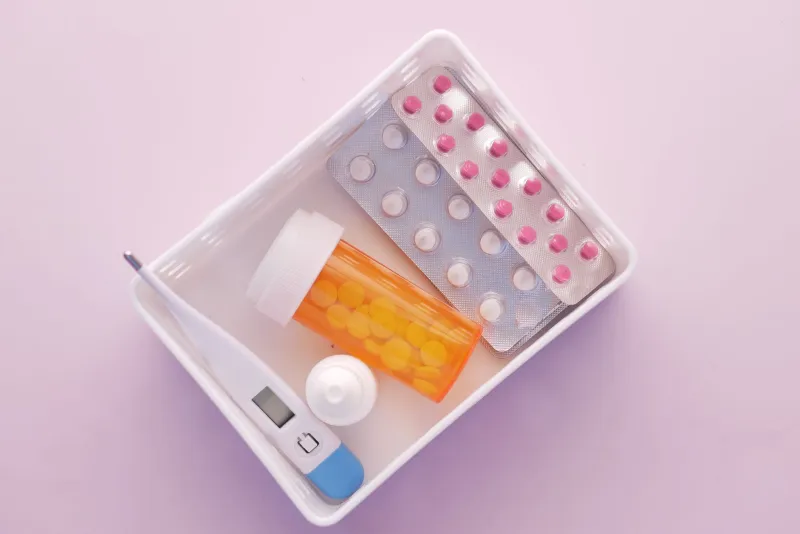
Picture your grandmother's bathroom. Small, probably. Tile floor, a single overhead light, maybe a bar of Ivory soap on the sink. And behind the mirrored door above the basin: aspirin. Iodine. A roll of gauze. Maybe a tin of Vaseline and a box of Band-Aids if she was well-stocked.
That was it. That was medicine at home.
Now open your own cabinet. Or don't — it might take a while to catalog everything in there.
The Sparse American Medicine Cabinet
For most of the 20th century, the average American home kept a modest collection of remedies. Aspirin handled everything from headaches to fevers. Iodine went on cuts. Milk of magnesia sat in the back for emergencies. The family doctor handled anything more complicated, which meant you'd see him a few times a year at most — and you'd better actually be sick when you did.
This wasn't stoicism for its own sake. Medications were limited, and most people simply didn't have access to a wide range of pharmaceutical options. The drug industry existed, but it operated in a world before television advertising, before internet symptom checkers, and before the idea that every physical discomfort represented a diagnosable, treatable condition.
Prescription medications required a doctor's visit. Over-the-counter options were few. The concept of a daily supplement regimen would have seemed exotic to most Americans in 1955 — vitamins were something you got from eating, not from a bottle on a shelf.
There was also a cultural dimension. Taking pills was something you did when you were genuinely unwell. Reaching for medication at the first sign of discomfort wasn't the reflex it would later become. You waited. You rested. You drank water. If it got worse, then you called the doctor.
How the Cabinet Started Filling Up
The shift happened in stages, each one adding a new layer to the American medicine cabinet.
The first major change came in the 1960s and 1970s, when pharmaceutical companies began aggressively expanding their prescription drug portfolios. New categories of medication — antidepressants, blood pressure drugs, cholesterol treatments — entered mainstream medicine and stayed there. Chronic condition management became a permanent feature of American healthcare, and with it came the daily pill routine.
The second wave arrived in 1997, when the FDA relaxed rules around direct-to-consumer pharmaceutical advertising. Suddenly, Americans were watching television ads that ended with the phrase "ask your doctor." The effect was immediate and measurable. Patients began arriving at appointments with specific medication requests. Drug companies spent billions crafting messages that turned vague symptoms into named conditions with branded solutions. Restless legs. Social anxiety disorder. Shift work sleep disorder. Each new diagnosis came with a pill.
The third wave was the wellness industry — a multi-hundred-billion-dollar machine that reframed health from the absence of illness into the constant pursuit of optimization. Supplements, probiotics, adaptogens, collagen powders, omega-3s, vitamin D, magnesium, zinc, biotin — the shelves of any pharmacy now dedicate more space to things that don't require a prescription than to things that do.
The Numbers Are Staggering
The United States consumes more prescription medication per capita than virtually any other nation on earth. Nearly half of all Americans take at least one prescription drug. Around a quarter take three or more. Among adults over 65, the majority take five or more medications simultaneously.
Over-the-counter spending adds billions more. The supplement industry alone generates over $50 billion annually in the US — for products that, in most cases, aren't required to prove they work before they hit the shelves.
None of this happened by accident. It was the predictable outcome of an industry with enormous financial incentives to expand the definition of what needs treating, combined with a healthcare system that often rewards prescribing over monitoring and a culture increasingly persuaded that discomfort is a problem to be solved rather than an experience to be endured.
The Case for Progress — And the Honest Questions
It would be wrong to frame all of this as pure decline. The medications filling today's cabinets include genuine miracles. Statins have prevented millions of heart attacks. Antidepressants have given people their lives back. Insulin management tools have transformed life with diabetes. The idea of returning to the five-item cabinet of 1955 isn't nostalgic — it's dangerous.
Chilhood mortality dropped. Chronic disease became manageable rather than terminal. Conditions that once quietly destroyed quality of life now have effective treatments. That matters enormously.
But the honest question — the one researchers, physicians, and health economists increasingly ask — is whether more always means better. Polypharmacy, the practice of taking multiple medications simultaneously, creates its own risks: drug interactions, side effects that require additional medications to manage, and a compounding complexity that even experienced doctors struggle to navigate.
And there's the quieter cultural question. A society that reaches for a pill at the first hint of discomfort is a different society than one that learned to distinguish between symptoms that need treatment and experiences that are simply part of being human. Somewhere in the space between those two approaches is probably where most of us should be living.
What the Cabinet Tells Us
The medicine cabinet is a small mirror held up to a much larger story. It reflects how American healthcare expanded, how the pharmaceutical industry learned to market directly to patients, how the wellness industry convinced millions that their baseline health was always improvable, and how a culture of optimization gradually replaced a culture of endurance.
Your grandmother's five things weren't enough. But fifty things might be too many. The right number is somewhere in between — and figuring out where that line falls is one of the more important health conversations America is still learning to have.