What Your Grandparents Knew Without Thinking — and What You'd Google in Under Eight Seconds
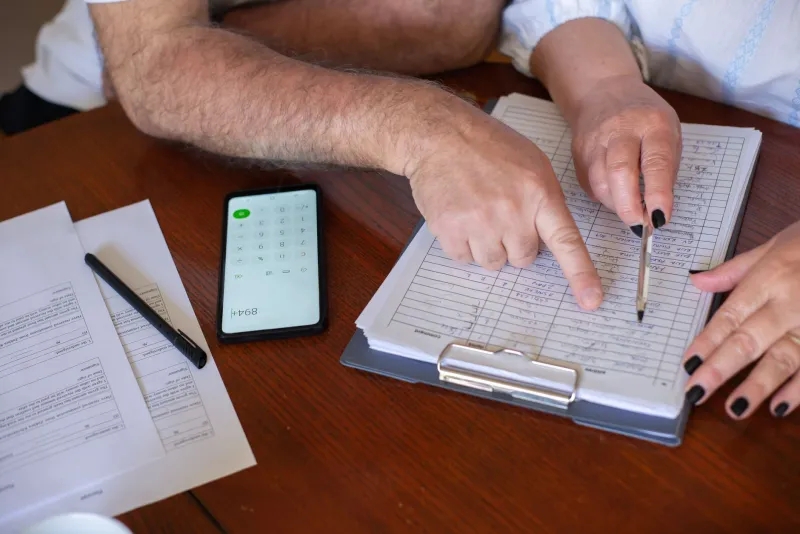
Ask someone born in 1945 to calculate a 15% tip on a $47 dinner check and they'll have the answer before you finish the sentence. Ask someone born in 1995 to do the same thing without their phone and you might get an apologetic laugh and a reach toward their pocket. Neither person is smarter than the other. But one of them built a skill through years of necessary practice, and the other never had to.
That's the quiet story running underneath a lot of technological progress. We celebrate what we've gained — and rightly so — but we rarely sit with what quietly slipped away. The skills your grandparents carried around in their heads weren't hobbies or party tricks. They were practical infrastructure. And most of them are gone.
The Map You Had to Read Before You Could Go Anywhere
Before GPS — and really before the widespread adoption of MapQuest in the late '90s — navigating an unfamiliar city required actual spatial reasoning. You studied a road atlas before a road trip. You memorized the sequence of turns. You tracked landmarks, estimated distances, and built a mental model of where you were in relation to where you were going.
This wasn't just inconvenient — it was genuinely cognitively demanding. And like any demanding cognitive task, it built something. Research published in the journal Nature Neuroscience found that London taxi drivers, who spent years memorizing the city's 25,000 streets before GPS made that unnecessary, had measurably larger hippocampi — the brain region associated with spatial memory and navigation — than the general population.
GPS didn't just change how we navigate. It changed how our brains engage with physical space. Today, many people can't reliably describe the route between their home and their office — a drive they've made hundreds of times — because they've never had to store that information. The phone holds it instead.
Is that a problem? Mostly no. But consider the last time your phone died in an unfamiliar city, and you'll know exactly what's been lost.
The Engine Your Grandfather Could Diagnose by Sound
Men and women who came of age in the 1950s and '60s often had a relationship with their vehicles that would seem almost mystical today. They could hear a knock in the engine and identify the problem. They changed their own oil, replaced their own brake pads, and knew what a carburetor was and how it worked. Not because they were mechanics by trade — because they were drivers, and driving used to require understanding.
Cars were simpler then, mechanically speaking, and that simplicity made them more legible. When something went wrong, you could often see it, hear it, or smell it, and you knew enough to address it yourself.
Modern vehicles are engineering marvels, and they're also essentially sealed systems. The engine is managed by dozens of computer modules. Diagnostics require proprietary software. Even a simple oil change on some newer models involves removing panels that most people have never seen. The car has become a service relationship rather than a mechanical skill — and most of us are fine with that until we're stranded on I-95 at 11pm and have no idea what the blinking light means.
The Numbers You Used to Carry in Your Head
Before smartphones, before pocket calculators, and for most people before desktop computers, mental arithmetic was a daily survival skill. Balancing a checkbook, calculating change, estimating whether you had enough money for everything in your cart — these required actual computation done in your head or on paper.
The same applied to dates, phone numbers, and addresses. People memorized the phone numbers of a dozen or more contacts because there was no other option. They remembered birthdays without a calendar notification because forgetting one had real social consequences.
Now consider what happens when a phone backup fails or an account gets locked. Many people cannot recall the phone numbers of their closest family members. They don't know their spouse's work number. They couldn't tell you their best friend's birthday without checking an app.
This isn't laziness — it's a completely rational response to not needing to remember. But memory, like navigation, is a use-it-or-lose-it system. When we stop exercising it, it atrophies. Neuroscientists are increasingly interested in whether the outsourcing of memory to devices has long-term effects on cognitive reserve — the mental buffer that helps protect against age-related decline.
The Plants and Animals That Had Names
This one is easy to overlook, but it might matter more than it seems. A generation raised close to the land — on farms, in small towns, near forests — knew the names and behaviors of the plants and animals around them. Not as trivia, but as practical knowledge. Which berries were safe. Which cloud formation meant rain by afternoon. Which bird call signaled a change in weather. Which plants soothed a sting.
That knowledge has almost entirely vanished from everyday American life. A 2017 study found that the average American child could identify far more corporate logos than common plant species. The world just outside the window has become essentially anonymous — present but unreadable.
This has real consequences for things like environmental literacy, foraging safety, and basic preparedness. But it also represents a quieter loss: the sense of being oriented in the natural world, of knowing your surroundings in a way that goes beyond what Google Maps can show you.
Which Skills Are Worth Reviving
Not all of them. Some are genuinely obsolete — knowing how to operate a rotary phone or restring a telegraph wire isn't coming back for good reason. Technology solves real problems, and celebrating progress means accepting that some things are better left behind.
But a short list of skills seems worth deliberately maintaining:
Basic navigation without GPS. Spend one afternoon a month using a paper map or navigating a new area without your phone. Your spatial cognition will thank you.
Mental arithmetic. Practice calculating tips, splits, and estimates in your head. It keeps the underlying circuits active in ways that matter beyond math.
Basic vehicle knowledge. You don't need to rebuild an engine, but knowing what your dashboard warning lights mean, how to check tire pressure, and how to change a flat is still practical self-sufficiency.
Memorizing what matters. Commit a handful of important phone numbers to memory. It takes twenty minutes and might one day save you hours.
The skills our grandparents carried weren't just practical tools — they were a kind of fluency with the physical world. We've traded a lot of that fluency for convenience, and most of the time the trade is worth it.
But it's worth knowing what you gave away. And occasionally, picking a little of it back up.