Seven Digits You'd Never Forget — and a Contact List You've Never Read
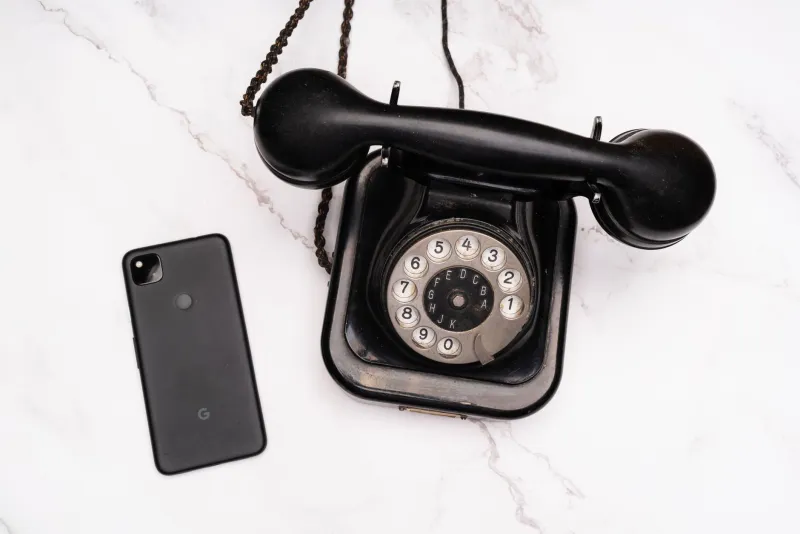
There was a time when your brain was a Rolodex. Your best friend's number, your grandmother's landline, the pizza place on the corner — all of it lived somewhere between your ears, ready to be dialed from any payphone, any borrowed telephone, any corner of the country you happened to find yourself in.
Today, most Americans carry a contact list with hundreds of names and couldn't recite more than two or three numbers from memory. We've outsourced one of the most basic cognitive tasks humans ever performed — and we barely noticed it happening.
When Memorization Was Just Part of Life
If you grew up before the late 1990s, phone number memorization wasn't a skill you practiced. It was just something you did. You called your friend's house so often that the sequence of digits burned itself into your brain the way a song lyric does — effortlessly, permanently.
Kids in the 1970s and 80s could rattle off a dozen numbers without pausing. Mom's work line. Dad's office. The neighbor who watched you after school. Your aunt in Ohio. These weren't stored anywhere except inside your head, which meant your head had to do the work.
There were no shortcuts. If you forgot a number, you looked it up in the phone book — a thick, yellow-paged directory that showed up on your doorstep every year and doubled as a booster seat for short kids at the dinner table. The friction of that process motivated you to just remember it next time.
The Moment the Phone Took Over
The shift didn't happen all at once. It crept in gradually, starting with the early digital phones of the 1990s that let you store a handful of numbers. Then came the address book feature on flip phones. Then the smartphone, which didn't just store contacts — it eliminated every practical reason to memorize them.
Why bother learning a number when the phone dials it for you? Why remember anything when you can just search for it? These were reasonable questions. And collectively, we answered them by quietly deciding that memorization was no longer worth the effort.
By the time most Americans had upgraded to a smartphone, the habit of memorizing phone numbers had already started to fade. Within a generation, it was nearly gone.
What the Science Actually Says
Here's where it gets interesting — and a little unsettling.
Memory researchers have a term for what we've done: cognitive offloading. It's the practice of using external tools — notebooks, calendars, devices — to handle information our brains used to store internally. And while it's not inherently bad, there are real tradeoffs.
The brain is a use-it-or-lose-it organ. When we repeatedly practice recall — pulling a phone number from memory rather than glancing at a screen — we strengthen the neural pathways associated with that kind of retrieval. When we stop doing it, those pathways weaken.
Researchers at University College London published findings suggesting that our increasing reliance on digital devices for memory tasks may be reducing our capacity for independent recall over time. The concern isn't that we've forgotten one phone number. It's that we've systematically reduced the mental exercise that kept certain cognitive functions sharp.
This doesn't mean smartphones are making us dumb. But it does mean we've made a trade we didn't fully think through.
The Resilience Problem Nobody Talks About
There's a practical dimension to this that tends to get overlooked in the broader conversation about screen time and attention spans.
What happens when the device fails?
Your phone dies. It's stolen. It falls into a lake at a campsite in Montana. You're in an accident and someone needs to contact your family. Suddenly, the question of whether you've memorized a phone number isn't abstract — it's urgent.
Older generations had a kind of built-in redundancy. The knowledge lived in their heads, which meant it couldn't be lost in a software crash or wiped by a pickpocket. Today, most people would be stranded without their phone in a way that would have seemed almost impossible to someone from 1985.
This is what's really changed: not just our memory habits, but our resilience. We've built systems that are extraordinarily efficient right up until the moment they fail — and then leave us completely helpless.
The Upside Is Real, Too
To be fair, cognitive offloading has genuine benefits. The mental bandwidth we used to spend memorizing phone numbers can now go elsewhere. We can hold more information about more people — their birthdays, their addresses, their email addresses — precisely because our phones are handling the storage.
We're also far less likely to lose touch with someone simply because we forgot their number. The contact list is, in many ways, a more robust social tool than human memory ever was.
And for people dealing with anxiety, learning differences, or memory challenges, the ability to rely on a device rather than internal recall isn't a crutch — it's a genuine accommodation that makes daily life more manageable.
What We Left Behind
But something softer was lost, too. There was something meaningful about knowing a number by heart. It was a small act of devotion — proof that a person mattered enough to occupy space in your mind. You didn't memorize the number of someone you barely knew. You memorized the numbers of the people who were central to your life.
In that sense, memory was a form of intimacy. The contact list is efficient. It is not intimate.
Today, you might have 400 contacts on your phone and genuinely struggle to recall the number of your closest friend. That's not a character flaw. It's just the logical result of a system that never asks you to try.
A Small Experiment Worth Trying
If you want to test this yourself, put your phone down and try to write out five phone numbers from memory. Most people manage two — their own and maybe one parent's. Some manage fewer.
It's not a catastrophe. But it is a window into how completely and quickly we handed a piece of ourselves over to a device — and how little we noticed when it happened.
Back then, the number was in your head. Forward, it's in the cloud. Whether that's progress depends entirely on what you think memory is actually for.