The Wrinkle That Told Your Story — Before the Filter Rewrote It
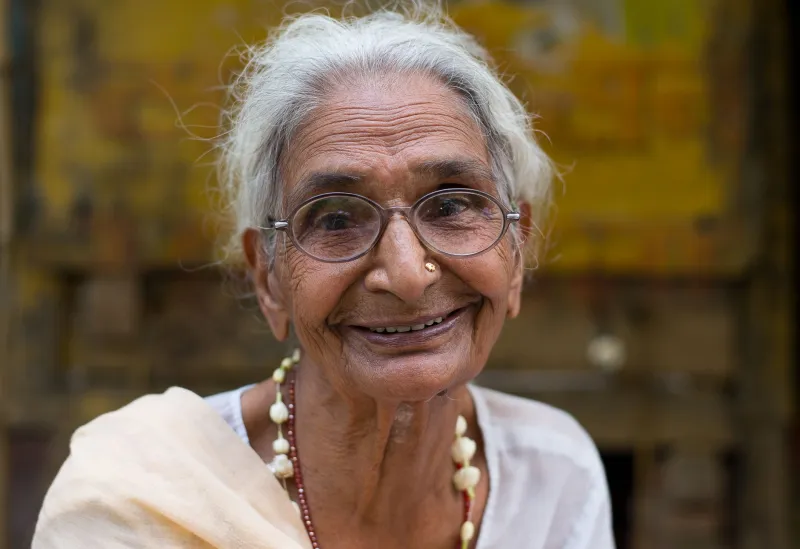
Look at a photograph from the 1960s or 70s — a candid one, not a studio portrait. Look at the faces. The crow's feet. The sun spots. The slight asymmetry of a nose that was never quite straight. Nobody smoothed it out. Nobody tried to. Those faces looked like the people they belonged to, and that was the whole point.
Now open Instagram. Scroll for thirty seconds. Notice anything?
Pores have vanished. Skin is uniformly luminous. Jawlines are sculpted. Even in supposedly casual, unposed shots, everyone looks like they've been lit by a professional and touched up by someone who really knows what they're doing. Often, they have been — just digitally, and often by themselves, in under a minute, using an app that's free to download.
Something has shifted in how Americans relate to their own faces and bodies. It happened gradually, then all at once. And it's worth asking what we've actually gained — and what quietly disappeared.
When Imperfection Was Just Called Life
For most of human history, the face you had was the face you showed. Aging was visible. Scars were visible. The physical evidence of a hard-lived life — calloused hands, a crooked tooth, deep-set lines from decades of squinting into the sun — wasn't hidden. It was simply part of who you were.
In mid-century America, a woman in her 50s looked like a woman in her 50s. That wasn't considered a failure. It was considered normal. The cultural expectation wasn't that you'd preserve the appearance of youth indefinitely — it was that you'd age the way everyone aged, and that would be fine.
Physical marks carried meaning. A scar from a childhood accident. A burn on a forearm from a kitchen mishap decades ago. Stretch marks from a pregnancy. These weren't things people agonized over. They were just part of the body's autobiography — evidence that you had lived, not proof that you had failed to maintain yourself properly.
The Slow Drift Toward Perfection
The shift didn't begin with smartphones. It began earlier, with the gradual expansion of the cosmetics industry in the postwar era, the rise of celebrity culture in the 1980s, and the increasing sophistication of advertising that told Americans — particularly American women — that there was always a better version of themselves available for purchase.
But the arrival of the front-facing camera and social media platforms accelerated something that had previously moved slowly. Suddenly, everyone was a publisher of their own image. Everyone had an audience, however small. And the tools to smooth, brighten, reshape, and refine that image were available to anyone with a phone.
Filters came first — the soft-focus ones that felt playful and harmless. Then came dedicated apps with smoothing sliders and blemish erasers. Then came the Facetune era, where teeth could be whitened, noses slimmed, and under-eye circles erased in seconds. Then augmented reality filters that applied digital makeup, altered bone structure, and enlarged eyes in real time, live on camera, as you spoke.
Each step felt small. Collectively, they rewrote what normal was supposed to look like.
The Dermatology Boom
It's not only digital. The physical interventions have grown alongside the digital ones.
The American Society of Plastic Surgeons reports that minimally invasive cosmetic procedures — Botox, fillers, chemical peels, laser treatments — have increased dramatically over the past two decades. Botox alone went from a relatively niche procedure in the early 2000s to something millions of Americans do routinely, including people in their 20s who are, in some cases, treating wrinkles they don't yet have.
The skincare industry in the US is now worth tens of billions of dollars annually. Walk into any drugstore and the anti-aging aisle stretches further than the cold medicine. The language is clinical, the promises are ambitious, and the underlying message is consistent: the face you have right now is a problem that needs to be managed.
None of this is inherently wrong. People have always wanted to look their best, and there's nothing shameful about skincare or cosmetic procedures. But the baseline has moved. What used to be considered enhancement is increasingly considered maintenance. What used to be optional is starting to feel mandatory.
What It's Doing to How We See Ourselves
Researchers studying body image have identified a phenomenon sometimes called "Snapchat dysmorphia" — a term that emerged when plastic surgeons began reporting patients bringing in filtered selfies as reference images for the faces they wanted. Not photos of celebrities. Photos of themselves, digitally altered, as the template for what they wanted to actually look like.
That's a significant psychological development. The gap between your real face and your filtered face used to be the gap between you and a movie star. Now it's the gap between you and you — a version of you that exists on a screen and is physically unattainable.
Studies have consistently linked heavy social media use with increased body dissatisfaction, particularly among younger users. But adults aren't immune. The cumulative effect of seeing thousands of curated, enhanced images — including images of people you actually know — recalibrates your sense of what's normal and what's acceptable.
What Got Lost in the Edit
Here's the thing about a scar, a wrinkle, a birthmark, a gap between teeth: it's specific to you. It's unrepeatable. Nobody else on the planet has your exact configuration of small imperfections, and those imperfections are a large part of what makes your face recognizably yours.
Filters flatten that. They apply the same smoothing algorithm to every face, pushing everyone toward a similar aesthetic — luminous, symmetrical, ageless. The result is a kind of visual homogenization that would have seemed bizarre to earlier generations. Everyone is beginning to look like a slightly different version of the same idealized face.
There's also something lost in the storytelling. The lines on a 60-year-old face aren't flaws — they're data. They tell you something real about a real life. A filtered version tells you nothing except that the person knows how to use an app.
Moving Forward Without Erasing Yourself
None of this is to say that skincare is bad, or that wanting to look good is shallow, or that cosmetic procedures are something to be ashamed of. People have always cared about appearance. That's human.
But there's a difference between caring about how you look and being unable to tolerate what you actually look like. One is self-expression. The other is something closer to self-rejection — and it's worth noticing when we've crossed from one into the other.
Back then, the face in the mirror was the face you lived with. Forward, the face on the screen is the face you perform. Somewhere between those two versions is the one that's actually yours.