Six People Around a Table, Six Screens in Their Hands
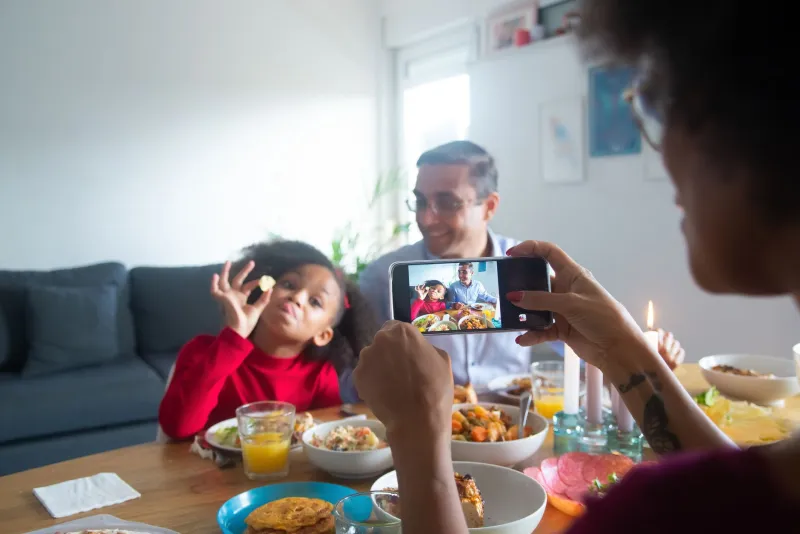
There was a time — not ancient history, just a few decades back — when dinner wasn't a meal. It was an event. The table was set, the TV was off, and for thirty to forty-five minutes, a family actually looked at each other. Not at a version of each other filtered through a screen. At each other.
That sounds almost radical now.
What Dinner Actually Looked Like
In the 1950s and 60s, the American family dinner was a near-sacred institution. It wasn't perfect — plenty of those tables had their share of tension, silence, and cold meatloaf — but it was consistent. A 1960 Gallup poll found that roughly 80 percent of American families ate dinner together most nights of the week. The ritual was baked into the structure of daily life. Dad came home at a predictable hour, Mom had been cooking since five, and kids knew that when dinner was called, you came.
Conversation at those tables was real and uninterrupted. You talked about school, about the neighborhood, about whatever happened that day. Grandparents passed down opinions. Parents asked follow-up questions. Kids learned how to hold a conversation, how to listen, how to disagree without walking away. The dinner table was, in a very literal sense, where Americans learned to be social.
Etiquette mattered too. Elbows off the table. Wait until everyone is served. Ask to be excused. These weren't arbitrary rules — they were a shared language of respect that said: the people in this room are worth your full attention.
When the Cracks Started Showing
The slow erosion didn't happen overnight. It crept in gradually, one distraction at a time.
First came television. By the late 1960s, the TV tray had become a symbol of American leisure — dinner in front of the evening news, or a game show, or whatever was on. Families still ate together, but the conversation started competing with Walter Cronkite.
Then came the microwave, fast food, and the fragmented schedules of two-income households. By the 1990s, family dinner was already becoming aspirational rather than routine. Kids had after-school activities. Parents worked longer hours. The idea of everyone sitting down at the same time began to feel logistically ambitious.
And then the smartphone arrived and finished the job.
The Table Today
A 2023 survey by the American Heart Association found that fewer than 30 percent of American families eat dinner together on a regular basis. Of those who do, studies from Common Sense Media suggest that a significant portion have at least one device present — and actively used — during the meal.
Think about what that actually means. You've managed to get everyone in the same room, at the same time, around the same food — and someone is still scrolling Instagram. Someone else is checking a notification. A kid is watching a video with one AirPod in, the other dangling.
The body is at the table. The mind is somewhere in the feed.
It's not entirely anyone's fault. The same devices that pull attention away from dinner are the ones that keep us connected to work, to friends, to the endless stream of information that modern life seems to require. The phone isn't just a distraction. For a lot of people, it's also their calendar, their social life, and their source of news. Putting it face-down for forty-five minutes feels like going offline in a world that never stops moving.
But the cost is real.
What Gets Lost When Nobody's Really There
Researchers at Columbia University found that teenagers who ate dinner with their families five or more times a week were significantly less likely to use drugs or alcohol, and more likely to report strong relationships with their parents. Studies from Harvard have linked regular family dinners to better academic performance, improved mental health outcomes, and stronger communication skills in children.
None of those benefits come from being in the same room. They come from talking. From being listened to. From the slow, unglamorous accumulation of daily connection that happens when people actually pay attention to each other.
You can't get that from a group chat.
The other thing that disappears when phones take over the table is something harder to measure: the art of being present with people who sometimes bore you. Sitting with a younger sibling who wants to talk about Minecraft. Listening to a parent repeat a story you've heard before. Learning to find something worthwhile in a conversation you didn't choose.
That's not a small thing. That's how empathy gets built.
Can You Get It Back?
Some families are trying. The "phone basket" approach — everyone deposits their device at the door before dinner — has become a genuine trend in households across the country. Restaurants in certain cities have experimented with phone-free dining sections. A few schools have started sending home dinner conversation prompt cards, essentially teaching parents how to talk to their own kids.
The fact that we need a system to do something humans did naturally for centuries says something about how far we've drifted.
But here's the thing about the dinner table: it's still there. Most American homes still have one. The chairs still pull out. The habit isn't gone — it's just buried under notifications and convenience and the low hum of always being connected to everything except the people in front of you.
Putting the phone down for dinner won't fix the world. But it might be the most old-fashioned, surprisingly powerful thing you do all week.