Twelve Photos in a Shoebox vs. Twelve Thousand on a Phone You'll Upgrade Next Year
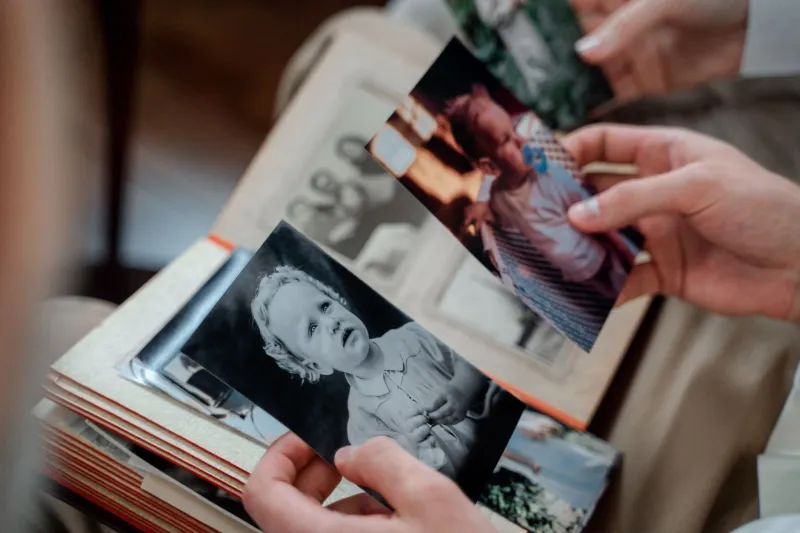
Somewhere in a closet or an attic, there's probably a box. Inside it: a stack of photographs, maybe a hundred, maybe two hundred. Some are in an album with little adhesive corners. Some have handwriting on the back — a date, a name, a place. The paper is slightly yellowed. The colors have softened.
Those photos survived multiple moves, a few floods, one house fire scare, and fifty years of entropy. And somehow, people still know exactly where they are.
Now open your phone's camera roll. Scroll back to 2019. How many of those images have you looked at since you took them?
The Economics of a Photograph
For most of the 20th century, photography was expensive in ways that are almost impossible to appreciate today. A roll of 35mm film gave you 24 or 36 exposures. Developing it cost real money — and you didn't see the results until days later, when you picked up an envelope at the drugstore and hoped for the best.
That structure forced decisions. You couldn't photograph everything. You thought before you pressed the shutter. Birthdays, holidays, graduations, vacations — these were the events worth spending film on. Ordinary Tuesday afternoons were not.
And because every photo cost something to produce, every photo that made it into an album had been curated. Not in the modern, Instagram sense of the word — but in the original sense. Someone looked at it, decided it was worth keeping, and put it somewhere intentional.
Those albums then became objects. Physical things with weight and texture that lived on bookshelves and coffee tables. They got pulled out at family gatherings. Grandchildren flipped through them. Stories got attached to images, repeated across generations until they became part of family mythology.
When Cameras Became Free and Infinite
Digital photography changed things gradually through the late 1990s and early 2000s, but the real rupture came with the smartphone. When the camera merged with the device you already carried everywhere, the cost of taking a photograph dropped to effectively zero.
No film. No development. No waiting. No limit.
And so we started photographing everything. The meal before we ate it. The sunset we'd seen a hundred times. The face of our sleeping child for the forty-third morning in a row. The receipt from a coffee shop. The funny sign on the highway.
By 2023, humans were taking approximately 1.8 trillion photographs per year globally. That number is so large it has stopped meaning anything. The Library of Congress — one of the world's largest archives — holds roughly 170 million items accumulated over more than two centuries. We collectively surpass that in photographs every few hours.
The Paradox of Abundance
Here's what nobody tells you about infinite storage: it doesn't make your memories more secure. It makes them less accessible.
When you had 200 photographs in a box, finding the one of your parents' wedding was a five-minute project. When you have 40,000 images spread across a phone, a backup drive, a defunct laptop, and a cloud account you can't remember the password to — that same search becomes an archaeological dig.
Researchers who study memory and cognition have identified something they call the photo-taking impairment effect. In experiments, people who photographed objects rather than simply observing them remembered less about those objects afterward. The act of taking the photo allowed the brain to outsource the remembering — and then the memory never fully formed.
We photograph experiences partly as a way of processing them. But if the photograph never gets looked at again, the processing never happens either. The moment gets captured and immediately buried under the next moment, and the one after that.
What an Album Actually Did
The family photo album was never just storage. It was a narrative device. Someone — usually a mother, usually on a rainy weekend — sat down and assembled a story. This came first. This came after. This is who we were in 1974.
That act of curation was itself a form of meaning-making. Choosing which photos made it into the album meant deciding which moments mattered. The discarded prints — and there were always some — represented a judgment. This one was blurry. This one made Aunt Carol look miserable. This one didn't capture what it felt like to actually be there.
The resulting album was imperfect and incomplete, which is also what made it honest. It didn't pretend to be a full record. It was a selection, and everyone understood that.
Today, we're theoretically capturing everything — but the everything is so vast that it effectively captures nothing in any meaningful sense. There's no curation, no narrative, no beginning and end. Just an undifferentiated mass of moments that all carry equal weight, which means none of them carry much weight at all.
The Question Nobody Asks Until It's Too Late
When a parent dies, one of the first things adult children reach for is photographs. Not files. Not cloud storage. Photographs — objects that can be held, passed around, placed on a table next to a candle at a funeral home.
A generation from now, that search is going to get a lot harder. Not because the images won't exist, but because no one will know where they are, what format they're in, or whether the device needed to open them still exists.
Scarcity forced our grandparents to be intentional. The shoebox they left behind was small, manageable, and full of things they'd actually chosen to keep. The 10,000 photos on your phone are the opposite: abundant, unorganized, and quietly at risk of meaning nothing to anyone.
The camera got better. The memory, somehow, got worse.