The Doctor Who Knew Your Name Has Been Replaced by a System That Knows Your Copay
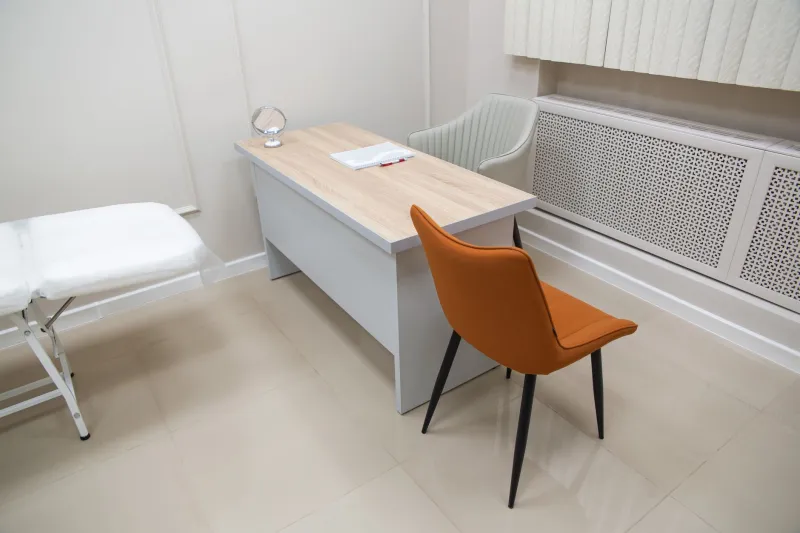
Sit in enough waiting rooms and you start to notice things. The chairs are always slightly too firm. The magazines are always slightly too old. And the feeling in the room — that low hum of collective unease — is always exactly the same. Nobody looks relaxed. Nobody looks like they're about to have a real conversation with someone who genuinely knows them.
That feeling is relatively new. And it says a lot about how far American healthcare has drifted from what it used to be.
The Doctor Who Came to Dinner
It sounds almost like a joke now, but there was a time when your family doctor might have known what you ate for breakfast. Not because of a wellness app or a nutrition tracker — because he'd been to your house. House calls were a genuine feature of American medicine well into the mid-twentieth century. Physicians built practices around neighborhoods, not networks. They knew families across generations.
The relationship between a patient and their primary care doctor was, for much of the last century, one of the more stable relationships in American life. You saw the same person year after year. They remembered your health history without having to scroll through a digital chart. They knew which of your symptoms were worth worrying about and which ones were just you.
That familiarity wasn't a luxury — it was medicine. Context matters in diagnosis. A doctor who knows you can spot when something is off in ways that no intake form can capture. The 1950s family physician might not have had the diagnostic tools we have today, but he had something arguably just as valuable: a complete picture of who you were.
The Waiting Room as Community Space
Here's something that gets overlooked in nostalgia about old-school medicine: the waiting room itself used to function differently. When a doctor served a community over decades, the people sitting in those chairs often knew each other. They were neighbors. They'd chat. The receptionist knew everyone by name and asked about their kids.
It wasn't a particularly efficient system. Wait times could be long. Appointments were loose. But there was a social texture to the experience that made it feel less clinical. You weren't just a patient number — you were a person in a community that happened to be gathered in one place.
Contrast that with the modern waiting room, where the first thing you do is check in on a tablet, confirm your insurance for the third time this year, and sit in a chair that faces a television playing news that nobody asked for. You might wait forty-five minutes to see someone you've never met before and may never see again.
Fifteen Minutes and a Follow-Up Portal
The average primary care appointment in the United States today runs somewhere between fifteen and eighteen minutes. That's the window in which a physician is expected to review your chart, hear your concerns, perform any relevant examination, make a diagnosis, discuss treatment options, write any necessary referrals, and document everything for the electronic health record.
Fifteen minutes. For your health.
The forces behind this compression are real and complicated — physician shortages, administrative burdens, insurance reimbursement structures that reward volume over depth. Doctors didn't choose this. Most of them went into medicine precisely because they wanted to do the thing the modern system makes hardest: spend real time with patients.
The result is a kind of assembly-line medicine that frustrates everyone. Physicians burn out at staggering rates. Patients feel unheard. And the gaps in care — the things that don't get caught in a rushed appointment — show up later, often as something more serious and more expensive.
The Prior Authorization Maze
Even when you do connect with a physician who has the time and intention to treat you well, the system itself often intervenes. Prior authorization — the process by which insurance companies require approval before covering certain treatments, medications, or procedures — has become one of the defining frustrations of modern American healthcare.
Your doctor recommends something. Your insurance company disagrees. Your doctor's office spends hours on hold, submitting paperwork, appealing denials. You wait. Sometimes the answer eventually comes back yes. Sometimes it doesn't. And throughout this process, you, the patient, are largely a bystander in a bureaucratic negotiation about your own body.
This would have been unrecognizable to a patient in 1955. Your doctor said you needed something, and you got it. The intermediary layer — the insurer, the utilization reviewer, the prior auth specialist — simply didn't exist in the same way.
Telemedicine: Progress With an Asterisk
The rise of telehealth, accelerated dramatically by the pandemic, has genuinely expanded access to care in meaningful ways. For rural patients, for people with mobility limitations, for anyone who can't easily take three hours off work for a routine appointment, a video call with a physician is a real improvement over nothing.
But let's be honest about what it is and what it isn't. A twelve-minute video call with a provider you've never met, reading from a template, is efficient. It is not the same as sitting across from someone who has watched you age, who remembers the health scare you had six years ago, who can read the way you're holding your shoulder and know something's wrong before you say a word.
Technology has made healthcare faster and, in many ways, more accessible. What it hasn't done — what it may not be able to do — is replicate the depth of a genuine patient-physician relationship built over years.
What We Quietly Gave Up
American healthcare in 2025 can do things that would have seemed miraculous in 1965. Surgical techniques, diagnostic imaging, pharmaceutical advances — the clinical capabilities are extraordinary. Nobody is arguing we should trade those back.
But somewhere in the pursuit of scale and efficiency, we traded away something that was also genuinely therapeutic: the experience of being known by the person responsible for your health. That sense of continuity, of being a person rather than a patient, mattered. It reduced anxiety. It improved outcomes. It made the whole thing feel a little less like a system and a little more like care.
The waiting room got quieter. The chairs stayed uncomfortable. And the doctor who used to know your name got replaced by a login screen that definitely knows your deductible.