Saturday Morning Used to End at the Toy Store. Now It Ends at a Checkout Screen.
The Church of Plastic and Possibility
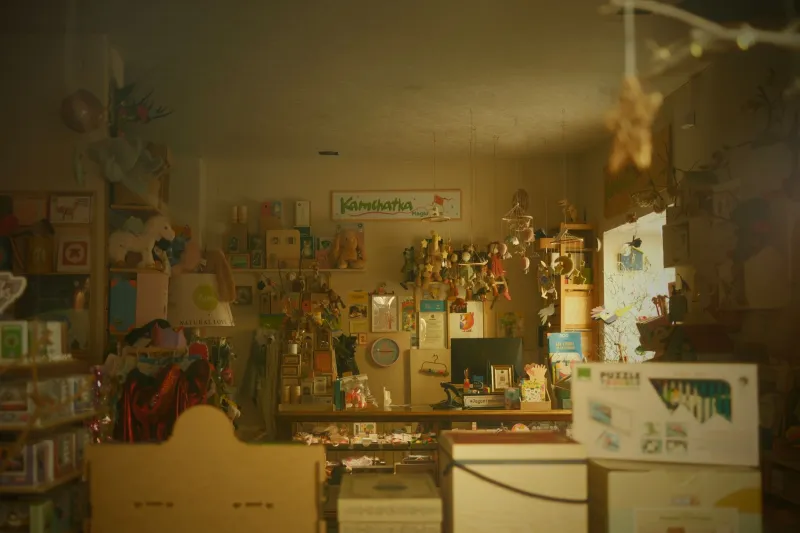
If you grew up in America between roughly 1975 and 2005, you probably remember the feeling. The automatic doors sliding open. The blast of air-conditioned air. Aisles stretching so far in both directions they seemed to disappear. The particular smell of new plastic and cardboard that meant you were somewhere special.
The toy store — and Toys 'R' Us above all others — was a genuine cultural institution. It wasn't just retail. It was theater. It was the place where want became real, where the things you'd seen advertised during Saturday morning cartoons suddenly existed in three dimensions, right in front of you, behind a piece of packaging you could touch.
For American children of that era, the toy store was one of the first places they experienced desire, disappointment, negotiation, and occasionally joy — all in the span of a single afternoon.
That experience is largely gone now. And the way it disappeared tells you a lot about what American childhood has become.
How the Toy Store Became a Destination
The physical toy store as a standalone retail category is a relatively modern invention. For most of the early 20th century, toys were sold in department stores, five-and-dimes, and general merchandise shops — one section among many, usually staffed by adults who knew almost nothing about what they were selling.
That changed in 1948, when Charles Lazarus opened a baby furniture store in Washington, D.C. that gradually shifted toward toys as the postwar baby boom created an enormous new market. By the 1970s, Toys 'R' Us had pioneered the category killer model — a warehouse-sized store dedicated entirely to toys, with inventory that no department store could match and prices that undercut almost everyone else.
The formula worked spectacularly. By the 1990s, the chain had more than 1,500 locations worldwide. Competitors like Kay-Bee Toys, Lionel Kiddie City, and Children's Palace filled in the gaps. Even Walmart and Target devoted enormous floor space to toy sections that felt almost like stores within stores.
For kids, this was an unprecedented golden age of physical browsing. You could spend an hour in the action figure aisle alone. You could hold the box, read the back, compare two options side by side, and agonize in a way that was genuinely pleasurable — the sweet tension of wanting something you didn't yet have.
The Experience That Can't Be Shipped
What's easy to forget, looking back, is how much of the toy store experience was about the sensory journey rather than the transaction itself.
The discovery was part of the point. You went in looking for one thing and left wanting six others you'd never heard of before walking through the door. The physical layout of the store was a curatorial act — end caps highlighted new releases, seasonal displays created urgency, and the sheer density of options meant you were constantly encountering something unexpected.
Children's development researchers have written about the cognitive value of this kind of open-ended browsing. When a child physically explores a store, picks up objects, reads packaging, and compares options, they're engaging in a form of real-world decision-making that involves tactile feedback, visual processing, and social negotiation (usually with a parent who has a budget in mind). It's messy and sometimes maddening, but it's also genuinely educational in ways that are hard to replicate.
The algorithm doesn't browse. It targets. When a child opens a tablet today, they're not discovering the toy landscape — they're being shown what a machine has determined they're most likely to want based on prior behavior. The sense of genuine surprise, of stumbling onto something you didn't know existed, has been engineered out of the experience almost entirely.
The Collapse That Changed Childhood Retail
Toys 'R' Us filed for bankruptcy in 2017 and closed its remaining U.S. stores in 2018. The obituaries were plentiful, and most of them correctly identified Amazon as the primary cause of death. The online giant had been quietly eating the toy category alive for years — offering lower prices, faster shipping, and an inventory so vast that even a Toys 'R' Us couldn't compete.
But Amazon wasn't the only factor. The chain had been saddled with enormous debt from a leveraged buyout in 2005, which left it without the capital to modernize its stores or compete effectively on price. It was fighting with one arm tied behind its back for more than a decade before the end came.
What filled the void wasn't another toy store. It was a combination of Amazon, Walmart.com, Target's online platform, and a sprawling ecosystem of YouTube unboxing videos, influencer marketing, and algorithm-driven recommendation engines that now do the work the store shelves used to do.
The result is a toy market that's bigger than ever by revenue — but almost entirely invisible. It happens on screens, in apps, in browser tabs left open overnight by children who've learned to curate their own wish lists with the precision of small corporate buyers.
What Kids Lost When the Aisles Went Dark
This is where it gets complicated, because the story isn't simply one of nostalgia versus progress.
Online shopping is genuinely more convenient for parents. The selection is objectively larger. Prices are often lower. And the ability to read reviews before buying means fewer expensive disappointments under the Christmas tree.
But something real disappeared when the physical toy store did. The shared ritual of going somewhere special — of a child and a parent navigating a space together, negotiating, discovering, and occasionally compromising — was a small but meaningful part of how families spent time together. The toy store trip was an event. The Amazon delivery is a logistics outcome.
There's also something worth noting about what happens when childhood desire is intermediated entirely by algorithms trained on purchase data. The toy store exposed kids to a wide, chaotic range of possibilities. The recommendation engine shows them a narrower and narrower slice of what it already knows they'll click on. That's not discovery. That's confirmation.
The Aisle That Won't Come Back
A handful of toy retailers still exist — Learning Express, small independent shops, and the occasional specialty store. Toys 'R' Us itself has attempted a quiet relaunch through Macy's partnerships and a standalone store or two. But the era of the category-killing toy superstore, that cathedral of Saturday morning possibility, is genuinely over.
The kids who grew up in those aisles remember them with a specific kind of fondness that's hard to explain to anyone who didn't. It wasn't about the toys themselves. It was about what it felt like to want something, to be surrounded by possibility, and to exist for an afternoon in a place designed entirely around the idea that childhood imagination deserved a very large building.
Now it gets a screen notification when the package is out for delivery.
Progress is real. But so is what we traded away to get it.