From One Tub for Eight People to a Rainfall Showerhead and a Eucalyptus Diffuser
In 1920, roughly one-third of American homes had no indoor plumbing at all. Of those that did, most had a single bathroom — a small, utilitarian room with a claw-foot tub, a sink, and a toilet — shared among everyone in the household. Baths were typically taken once a week, often on Saturday nights, in the same water that had already served two or three family members before you. You didn't linger. There was nothing to linger over.
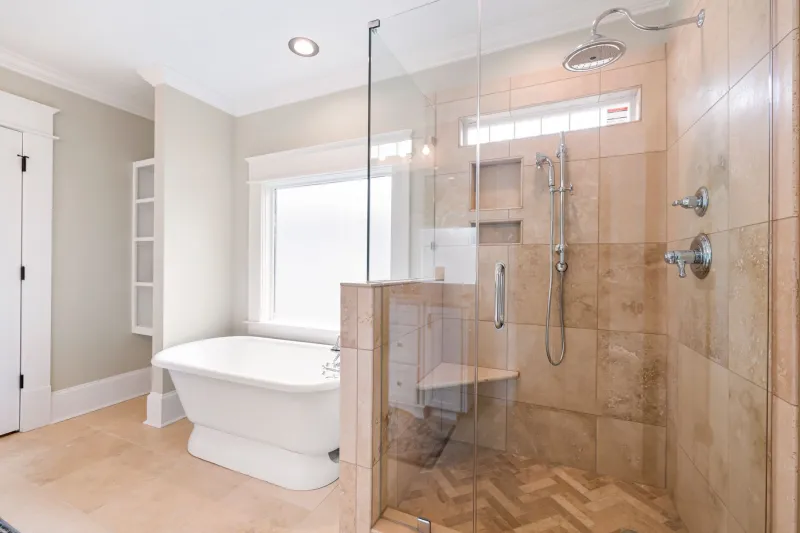
Fast forward a hundred years, and the average new American home features two and a half bathrooms. Master suites come equipped with double vanities, walk-in showers with multiple spray heads, freestanding soaking tubs that cost more than a used car, heated floors, and smart mirrors that display the weather while you brush your teeth. Scented candles. Plush robes hanging on hooks. A Bluetooth speaker mounted above the towel bar.
How did we get from one cold tub on a Saturday night to a personal spa?
The Plumbing Revolution Nobody Talks About
The first major shift was purely practical. The expansion of municipal water systems throughout the early twentieth century made indoor plumbing accessible to a growing portion of the American middle class. Before that, water had to be hauled, heated on a stove, and poured manually. Bathing was genuinely laborious. It wasn't laziness or poor hygiene that kept Americans from bathing daily — it was the sheer physical effort involved.
As indoor plumbing became standard, and as hot water heaters became affordable household appliances in the 1930s and 40s, the physical barriers to bathing disappeared. What had been a weekly chore became an increasingly routine act. By the postwar era, daily bathing was becoming the new norm, at least in middle-class households.
Along with that shift came a change in how Americans thought about cleanliness itself. The rise of germ theory in the late nineteenth century had already begun reshaping public health attitudes. By the mid-twentieth century, cleanliness was firmly embedded in American culture not just as a health practice but as a social and moral virtue. The advertising industry was happy to reinforce that message, with soap and deodorant brands building entire campaigns around the social consequences of insufficient hygiene.
The Bathroom Gets Its Own Room — And a Personality
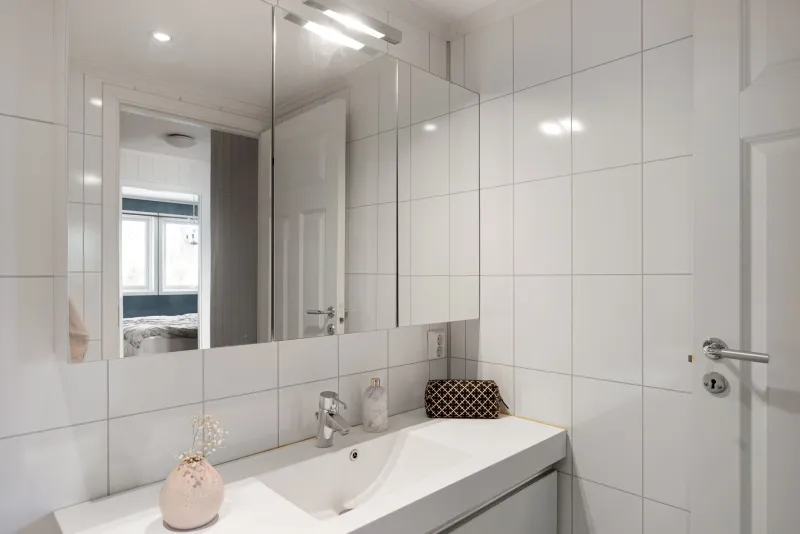
Through the 1950s and 60s, the bathroom was still primarily functional. It was small, it was tiled, and it was designed to be easy to clean. But the postwar housing boom meant that more American families were building new homes from scratch, and builders began responding to a growing consumer appetite for slightly more comfortable, slightly more private bathrooms.
By the 1970s, the master bathroom — a private bathroom connected directly to the primary bedroom — was becoming a selling point in new construction. This was a significant cultural marker. The idea that adults in a household deserved a bathroom of their own, separate from the children's bathroom, separate from the guest bathroom, represented a new attitude toward privacy and personal space.
The 1980s brought color-coordinated fixtures in avocado green and harvest gold, which seemed like a bold statement at the time and later became a punchline. But the underlying trend was real: Americans were starting to think of the bathroom as a space with aesthetic value, not just practical function.
When the Wellness Industry Moved In
The transformation from functional room to personal retreat accelerated in the 1990s and really hit full stride in the 2000s and 2010s. Several forces converged at once.
The spa industry exploded in popularity, introducing millions of Americans to the idea that bathing and grooming rituals could be genuinely restorative experiences rather than just hygiene maintenance. Home renovation television brought bathroom makeovers into living rooms every weekend. And a growing cultural conversation around self-care — accelerated by social media — elevated the bathroom from a private necessity to something worth photographing and sharing.
Along the way, the products proliferated. A bathroom cabinet that once held a bar of Ivory soap, a tube of Colgate, and a bottle of aspirin now might contain seventeen different skincare products, a jade roller, several varieties of bath salts, a dry-brushing kit, and at least one supplement whose purpose is vaguely defined as "supporting cellular renewal."
The market responded accordingly. The global bathroom accessories market is now worth tens of billions of dollars annually. Walk-in showers with rainfall heads and body jets are standard features in mid-range new construction. Freestanding tubs — functionally similar to the claw-foot tubs of a century ago but priced dramatically differently — are back in fashion as status symbols.
What the Bathroom Tells Us About Ourselves
There's something genuinely interesting about the fact that the most private room in the house has become one of the most aspirational. The bathroom is where Americans increasingly go not just to clean themselves but to decompress, to reset, to perform rituals of self-care that the rest of the day doesn't permit.
In a culture defined by overwork, overstimulation, and a chronic shortage of genuine solitude, the bathroom has become one of the last rooms in the house where it's socially acceptable to lock the door and be completely alone. The twenty-minute shower isn't just about getting clean. It's about having twenty minutes where nobody can reach you.
That's not a small thing. And it's probably not a coincidence that bathroom upgrades have become one of the most popular home improvement investments in America, consistently ranking among the renovations with the strongest return on resale value.
The room has earned its upgrade. We just might want to notice that we needed it in the first place.