The Room That Used to Take Four Minutes Now Has a Playlist and a Skincare Routine
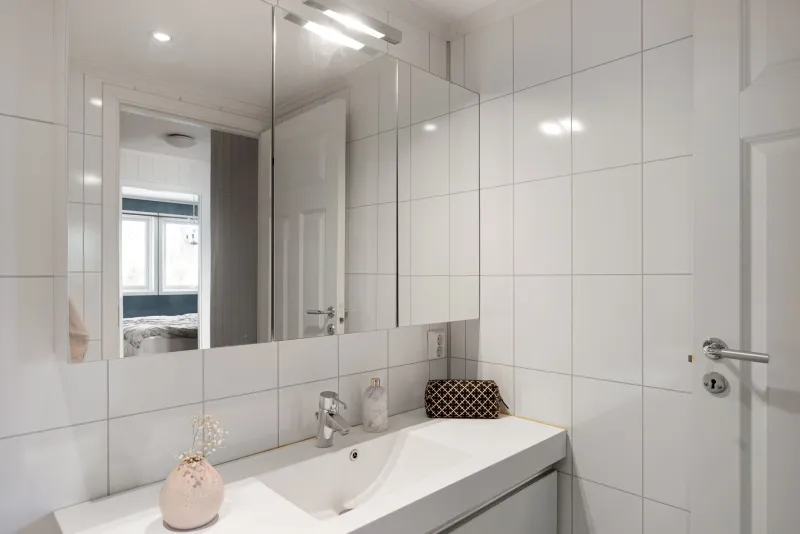
In the average American home of the 1950s, the bathroom was approximately the size of a modern walk-in closet. It contained a toilet, a sink, a tub with a showerhead bolted on as an afterthought, and a medicine cabinet holding aspirin, a razor, and maybe a shared tube of Brylcreem. A family of five shared it without complaint, because complaining about it would have made about as much sense as complaining about the kitchen having only one sink.
The bathroom was a utility. You went in, you got clean, you left. The whole operation took four minutes, maybe five if you had somewhere important to be.
Somewhere between then and now, that functional closet became the most renovated, most Instagrammed, most emotionally loaded room in the American home.
The Postwar Bathroom: Humble and Shared
Even as American prosperity expanded dramatically in the 1950s and '60s, bathroom culture remained remarkably spartan. Most middle-class homes had one full bathroom, occasionally a half-bath added as a sign of genuine affluence. Personal grooming products were minimal by modern standards — a bar of soap, a can of shaving cream, a bottle of shampoo that the whole family used. Deodorant was becoming standard. Moisturizer was something women used occasionally. Men's skincare was a concept that did not yet exist in any commercially meaningful way.
The routine itself was efficient by design. Hot water heaters were smaller, morning schedules were rigid, and the cultural expectation was that you cleaned yourself and moved on. Lingering in the bathroom would have struck most mid-century Americans as slightly eccentric.
And yet the room was considered perfectly adequate. Nobody was walking around feeling under-groomed or under-cleansed because they hadn't applied a seven-step serum regimen before breakfast.
The Industry That Decided You Needed More
The transformation of the American bathroom didn't happen because humans suddenly became dirtier or because personal hygiene science made a series of revolutionary breakthroughs. It happened, in large part, because the personal care industry got very good at creating needs that hadn't previously existed.
The 1970s and '80s brought the explosion of specialty hair care — separate shampoos and conditioners, products segmented by hair type, texture, and chemical treatment. The 1990s introduced the concept of the "skincare routine" to mainstream American consumers, largely driven by dermatologist-endorsed product lines that made a compelling case for cleansers, toners, and moisturizers as a daily medical necessity rather than a luxury. By the 2000s, men's grooming had become a major market category, with dedicated product lines that essentially repackaged existing items in darker bottles and sold them at a premium.
Each decade added new steps. Each new step required new products. Each new product required more cabinet space, more counter space, more time.
The bathroom didn't get bigger because Americans wanted more room to relax. It got bigger because the stuff filling it kept multiplying.
The Spa Bathroom and the Wellness Economy
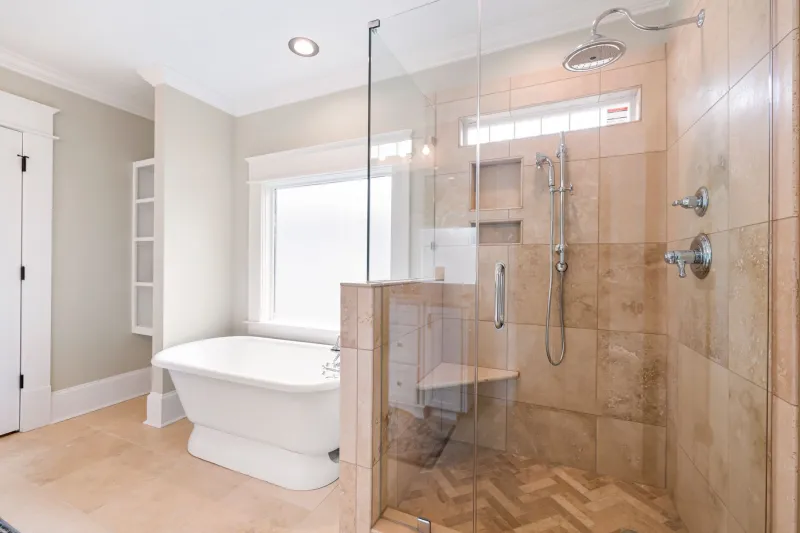
The 2010s brought the concept of the bathroom as a personal wellness retreat into the mainstream. Heated floors, rainfall showerheads, freestanding soaking tubs, smart mirrors that display your calendar while you brush your teeth — these features moved from luxury hotel amenities to aspirational home design staples with remarkable speed. The average cost of a full bathroom renovation in the U.S. hit roughly $10,000 to $15,000 by the early 2020s, with high-end remodels regularly exceeding $30,000.
And the product count kept climbing. Studies have found that the average American uses between nine and fifteen personal care products daily. For women, that number is often higher. A quick survey of a typical bathroom counter today might turn up face wash, toner, vitamin C serum, moisturizer, SPF, eye cream, body lotion, dry shampoo, leave-in conditioner, and a retinol treatment for nighttime — and that's before we get to the makeup.
The bathroom didn't expand to accommodate leisure. It expanded to accommodate inventory.
What Four Minutes Actually Got You
Here's the interesting thing: the people who grew up with those four-minute bathroom routines were not, by any measurable standard, less healthy or less attractive than the generations that followed. Life expectancy in 1955 was lower, but not because Americans weren't exfoliating.
What the minimal-product era did offer was simplicity and a different relationship with the body — one less mediated by marketing. You washed. You were clean. That was the standard, and meeting it didn't require a monthly subscription box.
There's real value in some of what the modern bathroom offers. Sunscreen is genuinely important. Dental care has improved significantly. Certain skincare ingredients have solid clinical backing. The hot shower after a long week is a legitimate pleasure, not a vanity.
But there's also a creeping suspicion, for anyone paying attention, that a significant portion of the modern bathroom routine exists because someone convinced us it needed to. The four-minute bathroom of 1955 didn't leave people feeling inadequate. The thirty-minute routine of today sometimes does — especially when you skip it.
The Room We Can't Stop Renovating
Americans now consistently rank the bathroom among the top rooms they most want to upgrade. It has become, in the cultural imagination, a space for recovery, ritual, and self-expression — not just hygiene. That's a genuinely significant shift in how we think about private space and personal identity.
Whether that shift represents progress, marketing, or both probably depends on how long you've been standing in front of your mirror this morning.