When Americans Actually Used Their Vacation Days (And Didn't Feel Guilty About It)
When Americans Actually Used Their Vacation Days (And Didn't Feel Guilty About It)
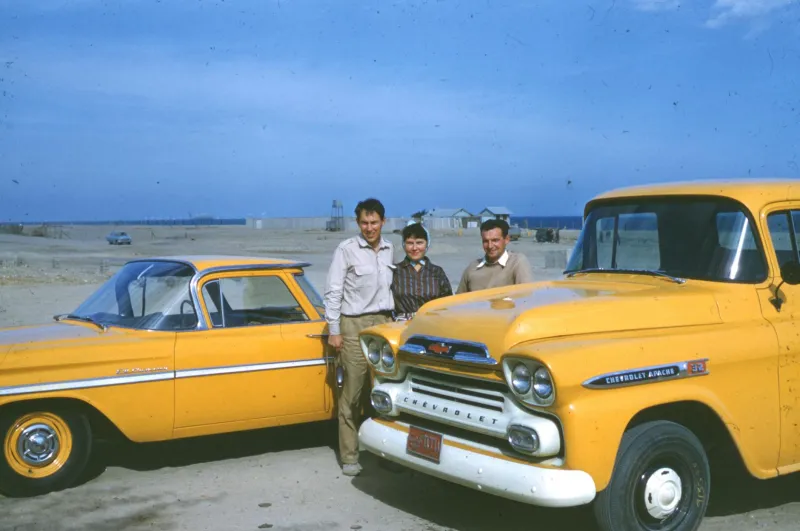
Picture this: It's 1965, and your neighbor Bob just got back from his annual three-week vacation to the lake house. He's tan, rested, and hasn't checked his work phone once—because work phones don't exist. His boss not only expected him to take the full vacation, but probably reminded him to "really unwind" before he left.
Fast-forward to today, and Bob's grandson is bragging on LinkedIn about how he "crushed it" during his working vacation in Cabo, answering emails between margaritas and taking client calls from the beach.
Somewhere between then and now, America completely flipped the script on vacation time.
The Golden Age of Actually Resting
In the post-war boom of the 1950s and 60s, taking your full vacation wasn't just normal—it was expected. The average American worker got two to three weeks of paid time off, and they used every single day. Companies built their operations around these predictable absences, hiring seasonal help and planning projects around when key employees would be unreachable.
"Unreachable" is the key word here. When someone went on vacation, they were genuinely gone. No cell phones, no laptops, no email. The most ambitious might call the office once from a payphone, but even that was considered excessive by many.
Vacations had clear boundaries. You left work at work, packed your bags, and disappeared for weeks at a time. Families would rent lake houses for entire summers, or drive cross-country with nothing but a road atlas and a cooler full of sandwiches.
The Slow Erosion Begins
The shift didn't happen overnight. Through the 1970s and 80s, vacation time started getting nibbled away by economic pressures and changing workplace cultures. Companies began viewing extended absences as inefficient. The rise of lean staffing meant fewer people doing more work, making it harder to truly disconnect.
But the real death blow came with technology. Email arrived in the 1990s, followed by cell phones, then smartphones. Suddenly, being "unreachable" became nearly impossible. What started as checking messages "just once" during vacation evolved into full remote work sessions from hotel rooms and beach chairs.
Today's Vacation Paradox
Here's where things get really wild: Americans now get roughly the same amount of vacation time as their 1960s counterparts, but we're using less of it than ever. In 2023, American workers left 768 million vacation days unused—that's nearly two full weeks per person sitting on the table.
Even when we do take time off, we've created an entirely new category: the "workcation." We pack our laptops alongside our sunscreen and convince ourselves that answering emails from a prettier location somehow counts as rest. We've become so afraid of falling behind that we've turned vacation into a performance—documenting our "balanced lifestyle" on social media while secretly stress-eating about our overflowing inbox.
The Health Cost of Never Stopping
Our grandparents understood something we've forgotten: rest isn't lazy, it's essential. Those long, unplugged vacations weren't just fun—they were literally life-extending. Studies now show that people who take regular vacations have lower rates of heart disease, better mental health, and increased creativity when they return to work.
Meanwhile, chronic vacation deprivation has become a public health crisis. We're more burned out, more anxious, and more prone to making mistakes than workers who actually use their time off. The irony is crushing: in our effort to be more productive by never stopping, we've become less productive overall.
The Culture That Ate Itself
Perhaps the strangest part is how we've convinced ourselves this is normal. We celebrate "hustle culture" and wear our exhaustion as a status symbol. Taking a full week off without checking email is now seen as either a luxury only the wealthy can afford or a sign that you're not serious about your career.
We've created a work culture where being perpetually available is confused with being valuable, where rest is viewed as weakness, and where a three-week vacation sounds as outdated as a rotary phone.
What We Lost Along the Way
Those long, disconnected vacations of the past weren't just about rest—they were about perspective. When you're truly away from work for weeks at a time, you remember who you are beyond your job title. You reconnect with family, rediscover hobbies, and return with fresh ideas and renewed energy.
Today's micro-breaks and working vacations don't provide that same reset. We've traded deep restoration for the illusion of balance, and both our health and our work are suffering for it.
The most sobering part? Nobody forced this change on us. We gradually gave away one of our most valuable benefits, convincing ourselves it was progress. Our grandparents would be baffled by our pride in being perpetually busy and our guilt about actually resting.
Maybe it's time to remember what they knew all along: sometimes the most productive thing you can do is absolutely nothing at all.