Nothing to Do, Nowhere to Be — and That's Where the Good Stuff Came From
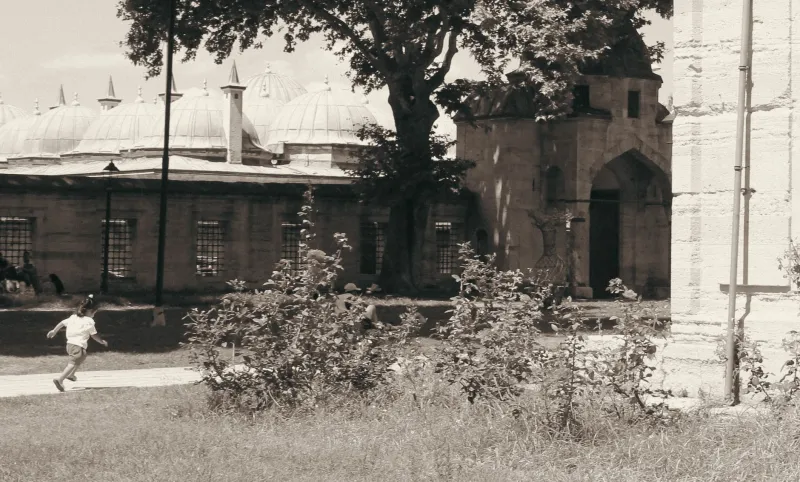
Isaac Newton didn't invent calculus because he had a deadline. He invented it because he had time. Specifically, he had about eighteen months of enforced idleness during the Great Plague of 1665 and 1666, when Cambridge University sent its students home and there was genuinely nothing to do. He went back to his mother's farm in Lincolnshire, stared at the world, and thought very hard about things that interested him. The apple story may be apocryphal, but the circumstances aren't: groundbreaking ideas emerged from a young man with unstructured time and no algorithm feeding him content.
That's not a coincidence. It's a pattern that runs through human history — and it's one we've quietly broken.
The Age of the Long Afternoon
For most of human history, boredom was an unavoidable feature of daily life. Not the restless, anxious boredom of someone whose phone just died — but the deep, settled kind that comes from having genuinely nothing demanding your attention.
Farmers waited out winters. Sailors crossed oceans with nothing but wind and time. Factory workers did repetitive tasks that left their minds completely free to wander. Kids in the 1950s, '60s, and '70s spent entire summer afternoons with no plans, no supervision, and no screens. American parents of that era would have laughed at the idea of scheduling enrichment activities for July. You went outside. You came back when the streetlights came on. What happened in between was entirely up to you.
What happened in between, it turns out, was often remarkable. Kids built things, invented games, formed bands, dug holes, staged elaborate pretend worlds, and occasionally got into productive trouble. Adults who commuted by train read novels, stared out windows, and had thoughts that surprised them. The gaps in the day weren't wasted — they were where the brain did its most interesting work.
What Neuroscience Actually Says About Doing Nothing
Researchers have a name for what the brain does when it's not focused on a task: the default mode network. It's the mental state associated with daydreaming, mind-wandering, and what scientists call "spontaneous thought." For decades, this was considered cognitive downtime — the brain idling between useful activities.
Then researchers started looking more closely. What they found was striking: the default mode network isn't inactive. It's extraordinarily busy. It's where the brain makes unexpected connections between unrelated ideas, processes emotions, consolidates memories, and generates the kind of associative thinking that underlies creativity. You don't get insights in the shower because hot water is magical. You get them because the shower is one of the last places where your brain is allowed to wander without interruption.
Boredom, properly understood, isn't the absence of thought. It's the condition that allows a particular kind of thought — one that's nearly impossible to summon on demand and impossible to sustain when you're constantly stimulated.
The Extinction of the Idle Moment
We have now built a world that makes genuine boredom almost impossible to experience. Every waiting room has a screen. Every commute has a podcast. Every line at the grocery store has a phone to check. The average American adult spends somewhere between four and seven hours a day looking at a screen outside of work — and those numbers have been climbing steadily since the iPhone launched in 2007.
This isn't a moral failing. The content is good. The podcasts are interesting. The videos are genuinely entertaining. The problem isn't that we're choosing distraction over depth — it's that we've eliminated the conditions under which depth used to develop naturally.
And the effects show up in unexpected places. Designers, writers, engineers, and scientists frequently report that their best ideas don't come during focused work sessions — they come during walks, long drives, or half-awake mornings. When companies like 3M famously gave engineers "free time" with no assigned projects, the result was Post-it Notes and masking tape. Google's 20% time policy produced Gmail. The pattern is consistent: unstructured time is not wasted time. It's generative time.
What Kids Are Missing — and What Adults Are Too
The loss is especially visible in childhood. The average American child's schedule today would have looked surreal to a kid in 1975. School, then soccer practice, then tutoring, then structured playdates, then homework, then screens. The unscheduled afternoon — the one where you built a fort or taught yourself to juggle or figured out how to pick a lock with a bobby pin — has largely disappeared.
Researchers who study child development have grown increasingly concerned about this. Unstructured play isn't just fun — it's how children develop executive function, problem-solving ability, and the capacity to tolerate discomfort. When every moment is managed and every gap is filled, kids don't learn how to generate their own direction. They learn to wait for the next thing.
Adults aren't immune. The reflexive phone-check has become so automatic that many people can't sit with a quiet moment long enough to notice what their own mind wants to think about.
The Radical Act of Doing Nothing
None of this requires a dramatic lifestyle overhaul. But it might require some deliberate subtraction.
Leave the podcast off on one commute a week. Sit with the discomfort of a waiting room without reaching for your phone. Let a Sunday afternoon go unscheduled and see what your brain decides to do with it. It will feel strange at first — maybe even mildly anxious. That's the withdrawal from constant stimulation, and it passes.
What sometimes shows up on the other side is something harder to describe: a thought you didn't know you were having. An idea that needed quiet to arrive. A version of yourself that's been waiting, patiently, for a gap in the noise.
Newton had eighteen months. You might only need twenty minutes. But you do have to actually give them away.