The Thick Booklet in the Junk Drawer vs. the Tutorial You're Pausing Every Ten Seconds
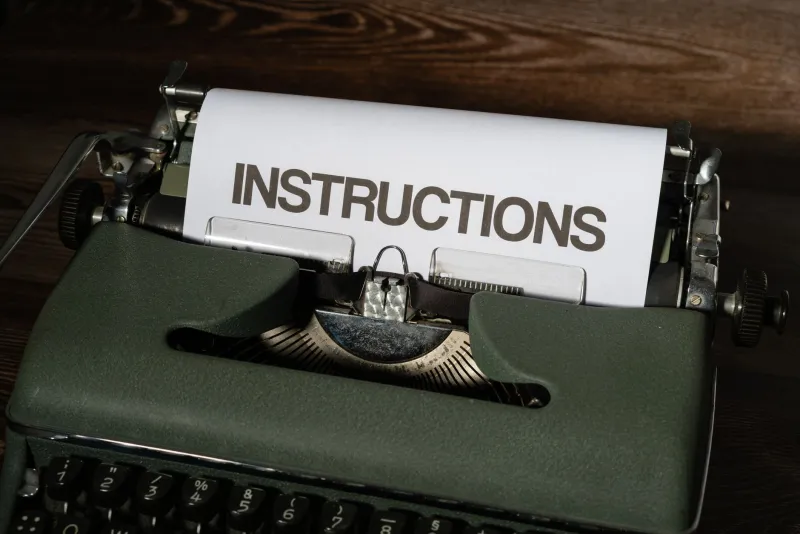
Somewhere in almost every American home built before 2005, there was a drawer. You know the one. It wasn't quite the junk drawer — that was a different disaster. This one had a specific purpose: it held the manuals. The VCR manual. The microwave manual. The one for the bread maker you used twice. They were thick, spiral-bound, occasionally translated from Japanese in ways that made you read sentences three times, and yet — somehow — they worked.
Fast forward to today. You unbox a new smart thermostat, a Bluetooth speaker, or a stand mixer, and inside the packaging you'll find a folded card the size of a birthday note that says, essentially: scan this QR code or visit our website. The assumption is clear. You'll figure it out. The internet exists.
That's a dramatic shift in how knowledge gets transferred from manufacturer to consumer — and it's happened so gradually that most of us haven't stopped to think about what changed, or why.
When Companies Felt Obligated to Explain Everything
Back in the 1970s, '80s, and even into the '90s, instruction manuals were a serious investment. Companies employed technical writers whose entire job was translating engineering specs into language a regular person could follow. The manual for a mid-range stereo system might run forty pages. A home computer setup guide could fill a binder. These weren't afterthoughts — they were considered part of the product itself.
If the manual failed you, there was always the 1-800 number. Customer service lines were staffed by actual human beings who walked you through problems in real time. Hold times were frustrating, sure, but the expectation was clear: the company sold you something, so the company owed you an explanation.
Warranty cards were another piece of the puzzle. You filled them out by hand and mailed them in — yes, physically mailed them — and in return you got registered in a system that could reach you if there was a recall or an update. It was slow, but it was deliberate. There was a relationship implied in the transaction.
The YouTube Assumption
Somewhere around the mid-2000s, the calculus changed. YouTube launched in 2005, and within a few years it became the world's largest how-to library. By the time smartphones made video accessible everywhere, companies realized something convenient: someone else would explain their products for free.
Now, the unofficial instruction manual for almost any product is a patchwork of YouTube tutorials, Reddit threads, and forum posts written by strangers who figured it out before you did. The company doesn't need to explain how to reset your router — a guy named Dave in Minnesota already made a twelve-minute video about it, and it has 400,000 views.
This isn't entirely a bad thing. In many ways, the democratization of how-to knowledge has been genuinely empowering. People are fixing their own appliances, building their own furniture, troubleshooting their own tech in ways that would have seemed impossible a generation ago. The DIY movement didn't just survive the digital age — it exploded.
But there's a hidden cost worth examining.
The Patience We Traded Away
The old manual required something the YouTube tutorial doesn't: sustained attention. You had to read through steps you didn't need yet to understand the steps you did. You built a mental model of the whole product before you touched a single button. That's actually a cognitively rich process — it's how experts learn, not just users.
The modern tutorial, by contrast, is designed for the moment of confusion. You search, you find a video, you skip to the relevant timestamp, you pause, you rewind, you do the thing, you close the tab. It's efficient. It's also shallow. You solved the immediate problem without understanding why the solution worked — which means the next time something goes wrong, you're starting from scratch.
There's also the question of what happens when the tutorial doesn't exist. Older products. Niche equipment. Anything obscure enough that Dave in Minnesota never made a video about it. For a generation raised on searchable answers, the absence of a quick fix can feel genuinely paralyzing in a way it simply didn't used to be.
What We Might Want to Bring Back
This isn't an argument for returning to forty-page manuals that spent three paragraphs defining the word "plug." Those had their own problems — dense, poorly organized, occasionally maddening.
But there's something worth recovering from that era: the idea that understanding a thing is different from using a thing. The old manual assumed you wanted to understand. The modern tutorial assumes you just want to get it working.
Some companies are starting to find a middle ground — interactive onboarding, in-app guides, short video series built directly into the product experience. It's not a drawer full of booklets, but it's a recognition that the QR-code-to-YouTube pipeline has limits.
And maybe on a personal level, the next time you buy something new, it's worth slowing down enough to actually read what comes with it — even if it's just a card. The habit of wanting to understand, not just operate, is one worth keeping alive.
The drawer is mostly empty now. But the instinct it represented — let me figure out how this actually works — is still worth something.