Three Days to Say Hello, Three Seconds to Say Nothing
The Weight of Waiting
Your great-grandmother would sit down at her kitchen table every Sunday afternoon, pull out her best stationary, and spend an hour crafting a letter to her sister in California. She'd choose each word carefully, knowing that once the envelope was sealed and dropped in the mailbox, those thoughts would take three days to cross the country—and another three days for a response to make the return journey.
By the time she received a reply, a full week had passed. If her sister mentioned the weather, it was last week's weather. If she shared news about the grandchildren, those children had already grown and changed in ways the letter couldn't capture. Yet these delayed conversations formed the backbone of relationships that lasted decades, sustained entirely by paper and ink.
The anticipation was part of the magic. Mail delivery was an event. People planned their days around it, listened for the postal truck, and felt genuine excitement when an envelope bore their name in familiar handwriting. A letter from someone you loved could make your entire week.
When Distance Demanded Devotion
In 1960, staying connected across long distances required serious commitment. A coast-to-coast phone call cost the equivalent of $50 in today's money for just three minutes. Most families saved long-distance calls for emergencies or special occasions. For everyday connection, you had one option: write.
This constraint created an interesting phenomenon. Because communication was expensive and slow, it had to matter. People didn't write to complain about traffic or share what they had for lunch. They wrote about hopes, fears, dreams, and the moments that shaped their lives. Letters became repositories of human experience, carefully preserved and often read multiple times.
Families kept shoeboxes full of correspondence. Children discovered their parents' courtship through love letters tied with ribbon. Historians could piece together entire family narratives from decades of careful correspondence. The effort required to maintain long-distance relationships meant that only the relationships worth preserving survived.
The Paradox of Instant Everything
Fast-forward to today, and the average American sends 67 text messages daily. We fire off thoughts the moment they occur to us, share photos of our coffee, and maintain running conversations with dozens of people simultaneously. Communication has never been easier, faster, or cheaper.
Yet something crucial was lost in the translation to digital speed.
Today's messages are disposable. We delete them without thinking, lose them when phones break, and rarely read them twice. The conversations that fill our days are forgettable precisely because they require no investment. When you can send a message instantly, every message becomes instantly forgettable.
The Economics of Emotional Investment
There's a psychological principle at work here that economists call "effort justification." The more effort we invest in something, the more we value it. When your grandmother spent 30 minutes writing a letter, folded it carefully, addressed an envelope, bought a stamp, and walked to the mailbox, she was investing significant time and money in that communication.
That investment made the letter precious to both sender and recipient. The person receiving it knew someone had devoted real resources—time, money, physical effort—to reach them. The letter represented not just information, but proof of caring.
Modern digital communication costs essentially nothing and requires minimal effort. You can send a message while walking, driving, or half-watching television. The recipient knows this. At some unconscious level, we all understand that a message sent without effort carries no weight.
What We've Traded Away
The shift from letters to instant messaging didn't just change how we communicate—it changed what we communicate about. Letters forced people to be thoughtful, to reflect on what was worth sharing, to consider how their words would land with the recipient days later.
Digital communication encourages the opposite. We share every passing thought, every minor frustration, every fleeting emotion. The result is a flood of trivial information that drowns out anything meaningful. We're more connected than ever, yet studies show Americans report feeling lonelier and more isolated than previous generations.
Consider the difference in permanence. Your great-grandparents' love letters still exist in attics and family archives, providing a window into their relationship for future generations. Your text conversations with your spouse will vanish when your phone dies, leaving no trace that your relationship ever existed.
The Art of Anticipation
Perhaps what we've lost most is the sweetness of anticipation. When communication was slow, the gap between sending and receiving created space for imagination. You wondered how your words were received, pictured the recipient reading your letter, anticipated their response.
That anticipation heightened emotion and deepened connection. The delay between thought and response allowed relationships to breathe, to develop mystery and longing that instant communication eliminates.
Today's "read receipts" and instant responses have created an expectation of immediate acknowledgment that adds stress rather than connection. We panic when someone doesn't respond within hours, interpreting normal delays as rejection or indifference.
The Lost Ritual of Letter Writing
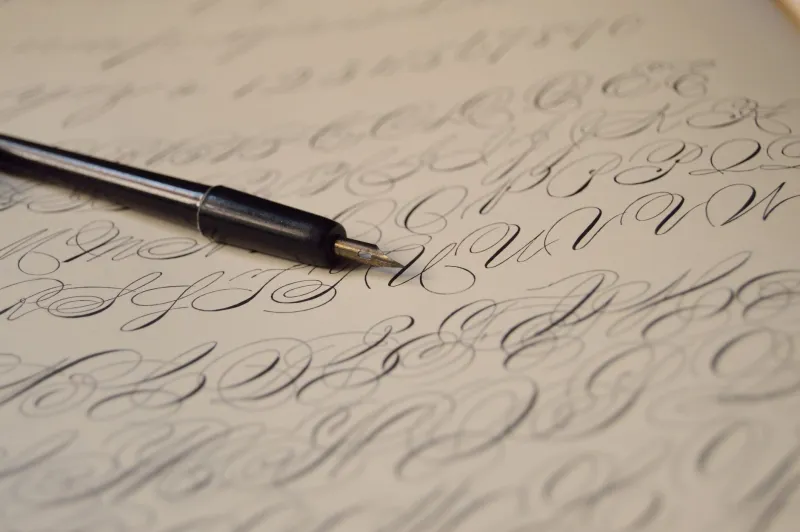
Letter writing was a ritual that demanded presence. You couldn't write while doing something else—it required your full attention. The physical act of forming words by hand, the sound of pen on paper, the smell of ink and envelope glue—all of these sensory elements made communication a embodied experience.
This mindfulness extended to reading. Letters were often read multiple times, shared with family members, and saved for rereading during difficult times. They became physical objects imbued with emotional significance, not just information delivery systems.
Finding Our Way Back
Some people are rediscovering the power of slow communication. Sales of fountain pens and quality stationary have increased in recent years. Young people are experimenting with "digital detox" periods and intentional letter writing. They're discovering what their great-grandparents knew: that the effort required to communicate thoughtfully makes the communication itself more meaningful.
The speed of modern communication isn't inherently bad, but it has trained us to value quantity over quality, convenience over connection. We've gained the ability to stay in touch with everyone and somehow lost the ability to truly reach anyone.
The three days it took for a letter to cross the country weren't wasted time—they were the space that allowed words to gather weight and meaning. In our rush to eliminate that delay, we may have eliminated something irreplaceable: the understanding that the most important things in life are worth waiting for.