When Every American Could Fix Their Own Car in the Driveway
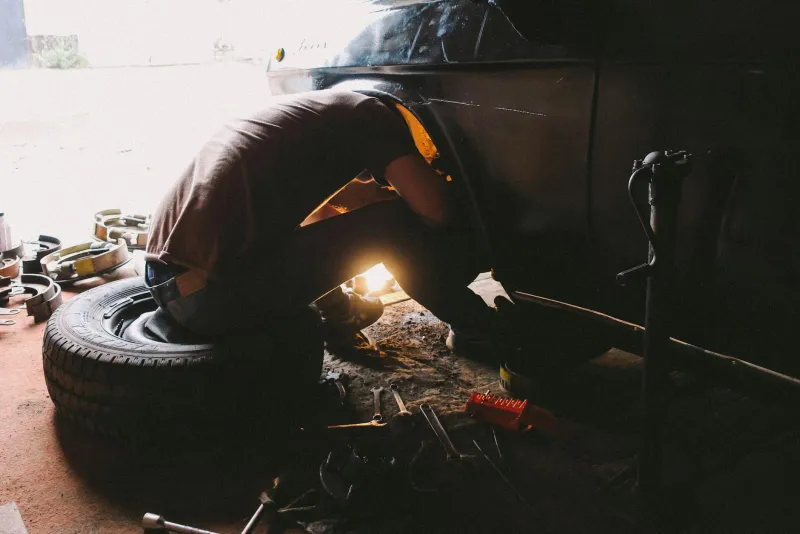
The Saturday Morning Ritual in Every American Driveway
Every weekend in 1978, the same scene played out across America: fathers and sons hunched over open car hoods, tools spread across concrete driveways, grease-stained repair manuals propped against windshields. The family car had developed a rough idle, or the brakes were squeaking, or the carburetor needed adjustment—and fixing it was just part of owning a vehicle.
Most American men, and plenty of women, could perform basic automotive surgery with nothing more than a socket set, some patience, and maybe a borrowed part from the neighbor's similar model. Cars were mechanical puzzles that ordinary people could solve. When something broke, you figured out why and fixed it yourself.
Today, that same car trouble sends Americans straight to the dealership, where technicians connect laptops to diagnostic ports and charge $150 just to identify the problem. The era of backyard mechanics has largely ended, and with it, a uniquely American form of self-reliance has quietly disappeared.
When Cars Were Just Bigger Lawn Mowers
The automobiles of the 1960s and 1970s operated on principles that any mechanically inclined person could understand. Engines had carburetors that mixed air and fuel using simple physics. Ignition systems relied on points and condensers that wore out predictably. Transmissions shifted gears through mechanical linkages you could see and touch.
Most importantly, when something went wrong, the symptoms pointed directly to the cause. A rough idle usually meant carburetor problems. Hard starting in cold weather suggested choke issues. Strange noises from the engine bay had identifiable sources that you could locate with your ears.
The Chilton and Haynes repair manuals that filled every auto parts store provided step-by-step instructions for virtually any repair, written for people who had never been to mechanic school. The books assumed basic intelligence and moderate patience—nothing more.
Millions of Americans learned automotive repair not from formal training but from necessity and opportunity. Cars broke down regularly, professional repairs were expensive, and the mechanical systems were simple enough that determined amateurs could master them with practice.
The Neighborhood Network of Automotive Wisdom
Backyard car repair created an informal but powerful community knowledge system. Every neighborhood had its car guys—the accountant who rebuilt transmissions on weekends, the teacher who could diagnose engine problems by sound, the retiree whose garage was better equipped than most professional shops.
These amateur mechanics shared tools, traded parts, and taught each other through hands-on demonstration. A tricky repair became a social event, with neighbors gathering to offer advice, hold flashlights, and celebrate when the engine finally turned over.
Auto parts stores functioned as community centers for this network. Clerks knew their customers' cars personally and could recommend the right parts for specific problems. Many stores allowed customers to test electrical components before purchase or borrow specialized tools for weekend projects.
The economic benefits were substantial. A professional brake job that cost $200 could be completed at home for $40 in parts. Tune-ups, oil changes, and minor repairs that today require dealership visits were routine weekend projects that saved families thousands of dollars annually.
When Computers Moved Under the Hood
The transformation began gradually in the 1980s as automakers introduced electronic fuel injection, computerized ignition timing, and digital engine management systems. These technologies improved reliability and fuel economy dramatically, but they also moved automotive repair beyond the reach of most amateur mechanics.
By the 1990s, diagnosing car problems required specialized scanners that could communicate with onboard computers. Simple mechanical adjustments gave way to software calibrations. Parts that had once lasted for years were now designed to be replaced as complete modules rather than repaired component by component.
The final blow came with the proliferation of proprietary diagnostic systems. Many car manufacturers designed their vehicles to require dealer-specific equipment for even basic maintenance. Independent repair shops struggled to keep up with the constantly changing technology, and backyard mechanics were completely shut out.
The Death of Automotive Independence
Today's vehicles are marvels of engineering that would astonish the mechanics of 1975. They start reliably in any weather, run for 200,000 miles with minimal maintenance, and produce a fraction of the emissions of their predecessors. But they've also become black boxes that only trained technicians can service.
A modern car's computer systems can monitor hundreds of sensors simultaneously, adjusting everything from fuel mixture to transmission shift points thousands of times per minute. When something goes wrong, the diagnostic process requires equipment that costs tens of thousands of dollars and software that's updated constantly.
Even simple maintenance has become complicated. Changing the oil in some modern vehicles requires removing plastic covers, accessing hard-to-reach drain plugs, and resetting computer-monitored service intervals. Tasks that once took 30 minutes in a driveway now require specialized lifts and tools.
What America Lost When the Hood Stayed Closed
The shift from mechanical to electronic automobiles represents remarkable technological progress, but it came with hidden social costs that we're only beginning to understand.
First, we lost a powerful form of practical education. Working on cars taught millions of Americans problem-solving skills, mechanical intuition, and the confidence that comes from fixing complex machines with your own hands. These lessons transferred to other areas of life, creating a generation comfortable with taking things apart to understand how they worked.
Second, we lost economic independence. When car repair moved from driveways to dealerships, it became significantly more expensive. Families that once handled most automotive maintenance themselves now face repair bills that can exceed their monthly car payments.
Most importantly, we lost a form of community. The informal networks of neighborhood mechanics created social bonds and knowledge sharing that extended far beyond automotive repair. When cars became too complex for amateur mechanics, these communities largely dissolved.
The Broader Pattern of Lost Self-Reliance
The transformation of automotive repair reflects a broader trend in American life: the replacement of user-serviceable products with sealed systems that require professional intervention. From smartphones to appliances to home electronics, we increasingly depend on products we cannot understand or repair ourselves.
This shift has obvious benefits—modern devices are more reliable and capable than their predecessors. But it also represents a fundamental change in our relationship with the tools we use daily. We've become consumers rather than users, dependent on manufacturers and service providers for even basic maintenance.
Finding the Balance Between Progress and Independence
Some Americans are pushing back against this trend through "right to repair" movements that demand access to service manuals, diagnostic tools, and replacement parts for everything from tractors to smartphones. A few automakers have begun offering more repair information and tools to independent mechanics and serious enthusiasts.
But the reality is that modern automotive technology has simply moved beyond what most people can reasonably master as a hobby. The question isn't whether we can return to the days of driveway engine rebuilds—we can't—but whether we can preserve some measure of mechanical understanding and independence in an increasingly complex world.
Perhaps the answer lies in recognizing what we gained and lost in the transition. Modern cars are safer, cleaner, and more reliable than ever before. But they've also made us more dependent on systems we don't understand and can't control. Finding the right balance between technological progress and personal autonomy remains one of the ongoing challenges of American life in the digital age.