Walk In, Start Monday: When Getting Hired in America Was Actually Simple

The Day America Complicated Getting a Job
In 1955, Robert Martinez walked into Westinghouse Electric in Pittsburgh, introduced himself to the shop supervisor, and started work the following Monday. No resume. No background check. No personality assessment or skills test. Just a handshake and a "Can you start next week?"
 Photo: Westinghouse Electric, via www.openingsuren.vlaanderen
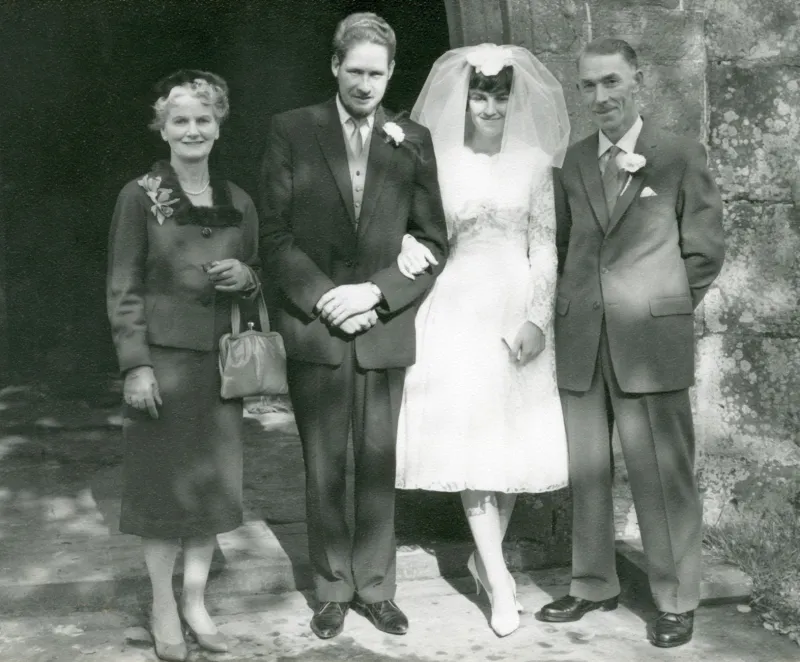
 Photo: Robert Martinez, via suministrosgaska.com
That wasn't unusual—it was how most Americans found work.
Today, that same manufacturing job would require an online application through an applicant tracking system, multiple rounds of interviews, drug testing, credit checks, and probably a few weeks of radio silence while HR "reviews candidates." What used to take one conversation now takes one month, minimum.
When Hiring Was Human
Mid-century American hiring operated on a simple principle: meet the person, size them up, make a decision. Factory foremen, shop owners, and office managers trusted their judgment over algorithms. If you seemed capable and showed up on time, you probably got the job.
The process was refreshingly direct. You'd hear about an opening from a neighbor, walk in during business hours, and ask to speak with whoever did the hiring. Sometimes that was the owner. Sometimes it was a supervisor. But it was always a human being who could make decisions on the spot.
Many companies didn't even require resumes for entry-level positions. Your work history lived in your head, not on paper. Employers asked about your last job, why you left, and whether you could handle the work. Character references mattered more than credentials.
The Birth of the Hiring Industrial Complex
Something shifted in the 1970s and accelerated through the following decades. Companies began treating hiring like a science project instead of a human interaction. The rise of human resources departments introduced layers of process between employers and potential employees.
By the 1990s, the resume had become mandatory, even for jobs that didn't require them. Computer systems started screening applications before humans ever saw them. The internet promised to make job searching easier but instead created a fire hose of applications that overwhelmed employers and frustrated job seekers.
Today's hiring process resembles nothing your grandfather would recognize. Applicant tracking systems automatically reject resumes for missing keywords. Companies post jobs they're not actively filling. Candidates endure multiple rounds of interviews for positions that used to require a single conversation.
The Modern Hiring Maze
Consider what applying for a basic office job looks like today: First, you create an account on the company's career portal. Then you upload your resume, only to manually re-enter all the same information into their system. Next comes the automated screening questionnaire, where one wrong answer eliminates you instantly.
If you're lucky enough to advance, you'll face a phone screening, followed by a video interview, then an in-person meeting, possibly a skills assessment, and maybe a final interview with the hiring manager. The whole process can stretch across months, during which the company might not communicate with you at all.
Meanwhile, employers complain they can't find good workers, while qualified candidates get lost in bureaucratic mazes designed to filter out risk rather than identify talent.
What We Lost Along the Way
The old system wasn't perfect—it often excluded women and minorities through informal networks and unspoken biases. But it had advantages we've forgotten. Hiring managers could spot potential that didn't show up on paper. Workers could demonstrate their capabilities through trial periods rather than theoretical assessments.
Most importantly, the process respected everyone's time. You knew where you stood quickly. Employers made decisions based on actual interactions rather than keyword matches and algorithm scores.
The human element meant second chances. If you'd been fired from your last job, you could explain the circumstances face-to-face. If you lacked experience, you could convince someone to take a chance on your enthusiasm. Today's systems rarely allow for such nuance.
The Paradox of Choice and Efficiency
Modern hiring technology promised efficiency but delivered the opposite. Companies receive hundreds of applications for every opening, creating more work, not less. Automated systems filter out qualified candidates while letting unqualified ones through. The process that was supposed to find the best people often finds the best at gaming the system.
Job seekers spend hours crafting applications for positions they'll never hear back about. Employers spend weeks interviewing candidates for jobs they could have filled in an afternoon. Everyone's time gets wasted in the name of thoroughness.
When Simple Actually Worked
Your grandfather's generation built the strongest economy in American history using hiring practices that today's HR professionals would consider primitive. They matched people to jobs based on intuition, conversation, and trust. It worked because both sides approached the process honestly.
Employers wanted workers who could do the job. Workers wanted steady employment and fair pay. The transaction was straightforward: demonstrate capability, get hired, prove yourself through work. No one pretended the hiring process itself was more important than actual performance.
That handshake hiring culture reflected a different relationship between workers and employers—one built on mutual respect rather than mutual suspicion. We've gained legal protections and reduced bias, but we've lost the human connection that made work feel like more than just a transaction.
Somewhere between then and now, we forgot that the best way to find out if someone can do a job is often just to let them try.