Payday Used to Feel Like Something. Now It Just Happens.
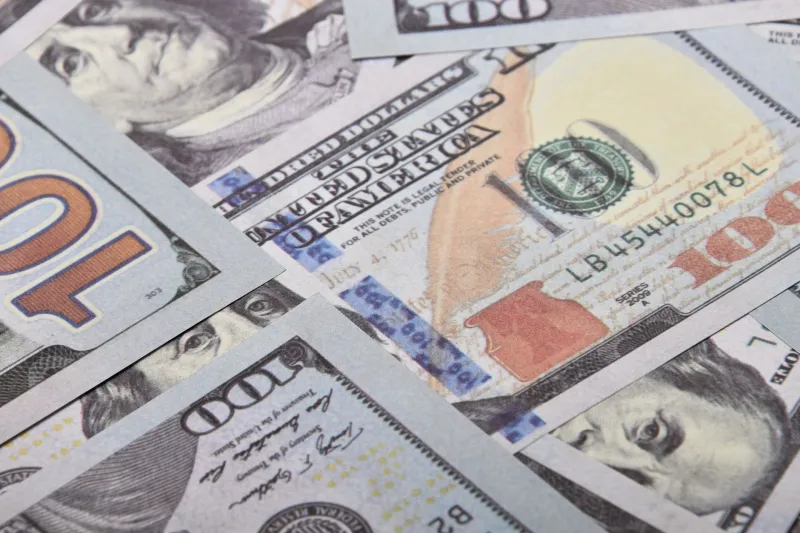
There's a moment that millions of American workers no longer experience: the weight of a pay envelope in your hand. Not a notification. Not a number updating in an app. An actual envelope, sometimes paper, sometimes small and brown and slightly crumpled from passing through a payroll clerk's hands, containing either a check made out specifically to you or, in earlier decades, the actual cash you'd earned that week.
For most of the twentieth century, that moment was the anchor of the American financial week. It was tangible, it was ceremonial in its own modest way, and it forced a kind of engagement with money that the direct deposit era has largely made optional.
The Friday Envelope
Through much of the early and mid-twentieth century, many American workers — particularly in manufacturing, construction, and service industries — were paid in cash. The payroll envelope was a genuine institution. You'd line up on Friday afternoon, receive your envelope from a supervisor or payroll window, and that was it. That was the week's work, made real and holdable.
Even as paper checks became the dominant form of payment in the postwar decades, the ritual remained largely intact. You received a physical check, typically weekly or biweekly, and you had to do something with it. You couldn't just let it sit. It needed to be cashed or deposited, which meant a trip to the bank — your bank, the one on the corner of Main Street where the teller had been there for fifteen years and knew your account number by memory.
That trip to the bank was its own small ritual. You'd endorse the check, slide it through the window or hand it across the counter, and walk out with cash or a deposit slip in your hand. For many families, this was also the moment when the week's financial decisions got made. How much to keep in the account. How much to take home in cash. How much to set aside for the electric bill, the grocery budget, the kids' school fees.
The Envelope System Wasn't a Budgeting Trend — It Was Just How People Lived
The cash envelope method that financial influencers now promote as a revolutionary budgeting hack was, for much of American history, simply how households operated. Not because anyone had read a personal finance book, but because physical cash demands a level of intentionality that digital numbers on a screen do not.
When you pull forty dollars out of an envelope labeled "groceries" and watch it become thirty, then twenty, then nothing, you feel the depletion in a way that a declining bank balance — viewed briefly on a phone screen before you put it back in your pocket — simply doesn't replicate. The physical nature of cash created a constant, low-level awareness of where the money was going.
Many families kept literal jars on the kitchen counter. One for rent. One for utilities. One for emergencies. One that didn't get touched unless something went wrong. This wasn't sophisticated financial planning. It was tactile accounting — money management you could see and touch and worry about in concrete terms.
Direct Deposit and the Invisible Paycheck
Direct deposit became available to American workers in the 1970s, but adoption was slow for decades. It wasn't until the late 1990s and 2000s that it became the dominant method of payroll distribution, and today roughly 94 percent of American workers receive their pay electronically.
The convenience is undeniable. No more waiting for a check to clear. No more Friday afternoon bank runs. No more risk of losing a paycheck or having it stolen. For workers living paycheck to paycheck, direct deposit can mean the difference between a bill being paid on time or not — money in the account at midnight means the automatic payment goes through.
But something changed in the transaction. When your paycheck arrives as a silent deposit while you're asleep on a Thursday night, and you glance at your phone in the morning to confirm the number went up, the money never quite becomes real in the same way. It enters your account as an abstraction and often leaves it the same way — as automatic payments, card transactions, and digital transfers that require no deliberate physical action.
What Financial Awareness Actually Costs
Researchers who study financial behavior have documented something that anyone who's switched from cash to cards has probably noticed intuitively: people spend more when they're not handling physical money. The act of handing over cash activates a different kind of awareness than tapping a phone. Pain of payment, economists call it. Cash hurts a little. Digital payments don't.
The implications for long-term financial health are significant. Americans carry more consumer debt, save less, and report higher levels of financial anxiety than at almost any point in modern history — even as the tools available for tracking and managing money have never been more sophisticated. We have budgeting apps, spending dashboards, automatic savings transfers, and real-time transaction alerts. We also have a national personal savings rate that has trended downward for decades.
Convenience and awareness, it turns out, are not the same thing. You can have all the tools in the world and still not feel the money leaving your hands.
The Check You Had to Sign
There's one more thing worth noting about the old payday ritual: the act of endorsing a check and physically depositing it required you to see the full number. Not a notification. Not a summary. The actual dollar amount, printed on a piece of paper you held in your hands.
For a lot of workers, that moment — standing at the bank window, check in hand — was a weekly reminder of exactly what their labor was worth and exactly how much they had to work with. It made the abstract concrete. It made the week's work visible.
We've traded that moment for a push notification. The money still arrives. The awareness, for many people, quietly didn't make the trip.